 Often times a plainly strange thinking finds its way into our perception of how humans/we relate to God. This false thought (although not often purposed) is thinking that instead of man being made for God, God was made for us, that God is for man, not properly vice versa. And of course the first problem with this statement is the word “made,” for God is eternal. He is the Creator, the maker, not “the made.” But not only is this the first problem, from here other issues develop.
We are told in Romans 1:25 that we have worshiped the created and neglected our “worth-giving” to the Creator. Why? Because in this mindset of ours, God has been lowered to our level. He has become just as much created as we are because we have made Him to be as if He was made for us. But this is completely false. Allow me to explain.
Continue reading
 Labels. What’s the use? What’s the point of using a label? Well, the typical reason is for convenience sake. Instead of having to explain what you are all about you simply say a word or two and describe yourself much faster. However, are labels effective? Do they really serve their purpose? I would like to convince you that they typically do not, and, in fact, often can be rather harmful. I would like to look at three different sample labels that will serve as spring boards into some points about the potential harmfulness of labels.
 You know you’re a legalist if you place more focus on externals than internals, if you give specific applications (personal standards) the weight of biblical principles, if you’re judgmental of and view yourself as more spiritual than those who have different convictions than you, if you substitute rules or standards for Christian maturity (having rules tell you what to do rather than making spiritually mature-based decisions), if you make rules to be the third person of the Trinity rather than the Holy Spirit (aka, you believe in works sanctification), or if your believe God’s favor on your and your spirituality is based on your performance rather than grace.
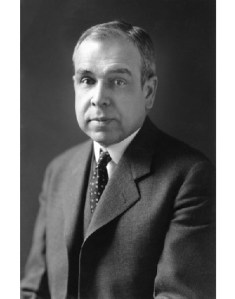 This is a paper I wrote my Junior year, spring semester of 2011, at Maranatha Baptist Bible College for a class entitled “Fundamentalism.” This is a narrowly focused biography of one of my heroes, J. Gresham Machen, specifically on how his actions made him a leader in the separatist movements during his day.
 Kirk E. Miller