 In a previous post, I made a paper I wrote last semester for Ethics class entiled A Scriptural Evaluation on the NT Believer’s Use of Tattoos and Body Piercings available for download. Another paper that I wrote for this class was on the issue of abortion. It was a brief paper, so I narrowed my topic to the specific issue of when personhood begins. In other words, I sought to answer the question, when is the fetus a person, or, when does it become a person. The reason the answer to this question is so important is because it is the watershed issue of the abortion debate. It determines whether or not the killing of the fetus is murder (the killing of an innocent person) or simply exterminating matter.
Continue reading
Worldview & Culture
A Scriptural Evaluation on the NT Believer’s Use of Tattoos and Body Piercings

Brian "Head" Welch - Christian, ex-guitarist of Korn, author of Save Me From Myself, and Christian musician.
Continue reading
The American Christian and Politics
Is Americanism Christian?
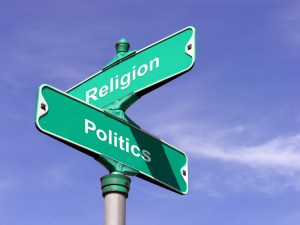
Was America founded on Christian principles? This is a question of much debate today, and in Christian circles we often run to our answer “yes” as if it will work as some sort of trump card, winning all moral issues in politics.
When the Articles of Confederation were tossed aside and the Constitution was being formed, our founding fathers established for us a Democratic Republic. In addition, America has tended to be very capitalistic. Our founding fathers also established for our nation various rights such as the right to bear arms and religious freedom.
Are any of these things inherently Christian? No. They are not. They are political ideologies. Our founding fathers may have been influence by Christianity, may have been Christians, and/or may have had Christian values, but that doesn’t make the political system Christian any more than Tony Dungy’s (a Christian NFL coach) football playbook a “Christian” playbook. Capitalism is no more Christian than Marxism, or vice versa; republic is no more Christian than a dictatorship, etc. So, when we say that out nation was founded on Christian principles, we cannot be speaking anything of government or political ideologies, for God does not describe any type of Christian government. He only describes one type of government—the God-given type (Rom 13:1).
Continue reading
What Fundamentalism Must Do to Survive: Fundamentalism’s Great Red Herring
 In order for Fundamentalism to survive as true historic Fundamentalism, the belief in and defense of fundamental doctrines that are essential to the Christian faith, we have noted so far that Fundamentalism must embrace criticism, recognize it is in a fight for survival against internal problems, and become willing to positively critique itself for the purpose of improvement. With that said, my second “must do” for Fundamentalism is really just a branch off of that first criticism.
Fundamentalism has grown accustom to what I like to call “Fundamentalism’s great red herring”–Evangelicalism.[1] Oh, it doesn’t take too much time in many Fundamentalist camps before you hear the call against Evangelicalism. But let me say one note of caution, for the most part, Fundamentalists critique evangelicalism fairly accurately. The accuracy of their critique is, therefore, not my critique. Further, the existence of their critique is not my critique (for we ought to identify problems). My critique is that evangelicalism has become many Fundamentalists’ red herring.
Continue reading
What Fundamentalism Must Do To Survive: Embrace Criticism
 The first thing Fundamentalism needs to do in order to survive as historic Fundamentalism, as Fundamentalism was intended to be, is to embrace criticism. So yes, I am criticizing Fundamentalism for not taking criticism well—-we’ll see how that turns out for me. To lay out my basic thesis, Fundamentalism must become open to criticism and self-examining. Fundamentalism also needs to owe up to its failures.
Continue reading
 Kirk E. Miller