C.S. Lewis on the Problem with “the Problem of Evil”

In Mere Christianity, Lewis gives this great little response to the so-called problem of evil.

If a good God made the world why has it gone wrong? And for many years I simply refused to listen to the Christian answers to this question, because I kept on feeling “whatever you say, and however clever your arguments are, isn’t it much simpler and easier to say that the world was not made by any intelligent power? Aren’t all your arguments simply a complicated attempt to avoid the obvious?” But then that threw me back into another difficulty.

My argument against God was that the universe seemed so cruel and unjust. But how had I got this idea of just and unjust? A man does not call a line crooked unless he has some idea of a straight line. What was I comparing this universe with when I called it unjust? If the whole show was bad and senseless from A to Z, so to speak, why did I, who was supposed to be part of the show, find myself in such violent reaction against it? A man feels wet when he falls into water, because man is not a water animal: a fish would not feel wet. Of course I could have given up my idea of justice by saying it was nothing but a private idea of my own. But if I did that, then my argument against God collapsed too- for the argument depended on saying that the world was really unjust, not simply that it did not happen to please my private fancies. Thus in the very act of trying to prove that God did not exist–in other words, that the whole of reality was senseless–I found I was forced to assume that one part of reality–namely my idea of justice–was full of sense. Consequently atheism turns out to be too simple. If the whole universe has no meaning, we should never have found out that it has no meaning: just as, if there were no light in the universe and therefore no creatures with eyes, we should never know it was dark. Dark would be without meaning.

C.S. Lewis, Mere Christianity, book 2, chapter 1, paragraphs 5-6.

To be fair, this answer in particular does not resolve the dilemma for the Christian. He or she is still left to grapple with the nature of evil within the Christian worldview itself. Since this worldview simultaneously holds to a God who is all-loving and all-powerful, the question then is, why does this God not eliminate evil? Lewis does not resolve that dilemma (at least here).

But, regardless of that, Lewis’ argument nonetheless puts the non-Christian, who has some sense of evil, on his heels. From where does that sense of evil, goodness, justice, morality, etc. arise? This is their (=the non-Christians’) problem of evil–within their framework: they cannot explain why a sense of evil persists.
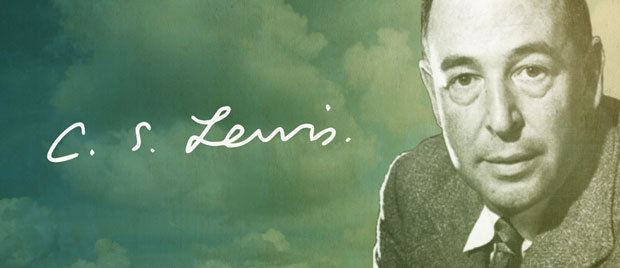
C.S. Lewis on the Danger of God’s Goodness

[I]t is no use either saying that if there is a God of that sort–an impersonal absolute goodness–then you do not like Him and are not going to bother about Him. For the trouble is that one part of you is on His side and really agrees with His disapproval of human greed and trickery and exploitation. You may want Him to make an exception in your own case, to let you off this one time; but you know at bottom that unless the power behind the world really and unalterably detests that sort of behaviour, then He cannot be good. On the other hand, we know that if there does exist an absolute goodness it must hate most of what we do. That is the terrible fix we are in. … We cannot do without it. and we cannot do with it. God is the only comfort, He is also the supreme terror: the thing we most need and the thing we most want to hide from. He is our only possible-ally, and we have made ourselves His enemies. Some people talk as if meeting the gaze of absolute goodness would be fun. They need to think again. They are still only playing with religion. Goodness is either the great safety or the great danger-according to the way you react to it. And we have reacted the wrong way.

C.S. Lewis, Mere Christianity, book 1, chapter 5, paragraph 3.

C.S. Lewis on the Limited Domain of Science

I’ve been reading Mere Christianity by C.S. Lewis lately. Over the next few weeks I plan on sharing some sections with some occasional commentary. (If you follow me on social media [Facebook; Twitter], you will see that I will be sharing some quotes there too.)


In Mere Christianity Lewis makes the following comment:

You cannot find out which view  is the right one by science in the ordinary sense.[1] Science works by experiments. It watches how things behave. Every scientific statement in the long run, however complicated it looks, really means something like, ‘I pointed the telescope to such and such a part of the sky at 2:20 a.m. on January 15th and saw so and-so,’ or, ‘I put some of this stuff in a pot and heated it to such -and such a temperature and it did so-and-so.’ Do not think I am saying anything against science: I am only saying what its job is. And the more scientific a man is, the more (I believe) he would agree with me that this is the job of science–and a very useful and necessary job it is too. But why anything comes to be there at all, and whether there is anything behind the things science observes–something of a different kind–this is not a scientific question. If there is ‘Something Behind,’ then either it will have to remain altogether unknown to men or else make itself known in some different way. The statement that there is any such thing, and the statement that there is no such thing, are neither of them statements that science can make. And real scientists do not usually make them. It is usually the journalists and popular novelists who have picked up a few odds and ends of half-baked science from textbooks who go in for them. After all, it is really a matter of common sense. Supposing science ever became complete so that it knew every single thing in the whole universe. Is it not plain that the questions, ‘Why is there a universe?’ ‘Why does it go on as it does?’ ‘Has it any meaning?’ would remain just as they were?

C.S. Lewis, Mere Christianity, book 1, chapter 4, paragraph 2 (emphasis added).

In short, Lewis is pointing out that science has a particular domain, and as such, has a limited object of study. It cannot, by definition of being that discipline which studies the observable (not the non-observable), reach outside of the observable into the realm of the non-observable (e.g., God) or into matters of meaning, e.g., why the observable is the way it is.

To be specific, Lewis’ comments serve as a rebuke to those who adapt the following sorts of arguments:

  • I believe what we can know through science (observation).
  • Science cannot observe God.
  • Therefore, God does exist.

(Besides the fact that this sort of argument is non sequitur) what this sort of argument fails to recognize is the limited domain of scientific study (i.e., it is limited to the observable). This form of argumentation makes a huge assumption–that science is not merely a means of gaining knowledge, but the means (i.e., the sole means) of gaining knowledge. But this is merely to preclude a prior–not by demonstration or argument, but simply out of hand, without any justification–all other means of inquiry.


Notes

[1] Here Lewis is referring to the following two views: on the one hand, a view that all there is is the material world and that there is no God, for instance (what he calls “the materialist view”), versus a view, on the other hand, that holds to a belief in a God who in some way stands behind the material world (“the religious view”).

A Review of What is Marriage? Man and Woman: A Defense

The following are notes from a presentation delivered in partial fulfillment of the requirements for the course ME 8000 Contemporary Sexualities: Theological and Missiological Perspectives taught by Dr. Robert Priest and Dr. Stephen Roy at Trinity Evangelical Divinity School, October 2015.


Summary

Introduction

  • Authored by Sherif Girgis, Ryan Anderson, and Robert George.
  • Published in December 2012, about two and a half years before the Obergefell decision (June 2015).
  • Based on an article published in the Harvard Journal of Law and Public Policy.[1]
  • Considered by many to be the most formidable defense of the conjugal view of marriage and has been highly read and engaged.[2]
  • Seeks to defend the conjugal view of marriage and demonstrate its rational and therefore constitutional basis.[3] The authors argue that “redefining civil marriage is unnecessary, unreasonable, and contrary to the common good.”[4]
  • They seek to do so without appeal to religious authority[5] or historical precedent (i.e., “It’s always been this way”),[6] and only secondarily by the support from the social sciences.[7] Their argument is mainly philosophical in nature.[8]

Framework

The underlying assumption that drives the entire project is the following: To argue that gay and lesbian couples ought to have equal access to marriage assumes a priori that same-sex couples can actually constitute a marriage. But this begs the question—the question that serves as the title to this book—what is marriage? A couple is not restricted from access to marriage if that couple cannot—by definition—constitute a marriage. We cannot simply argue that everyone ought to have equal access to marriage. We first need to make a case for what that marriage is to which we think everyone, i.e., everyone who can actually constitute it, ought to have equal access. As they state very succinctly, the issue at stake here is “not about whom to let marry, but about what marriage is” (emphasis added).[9]

Continue reading