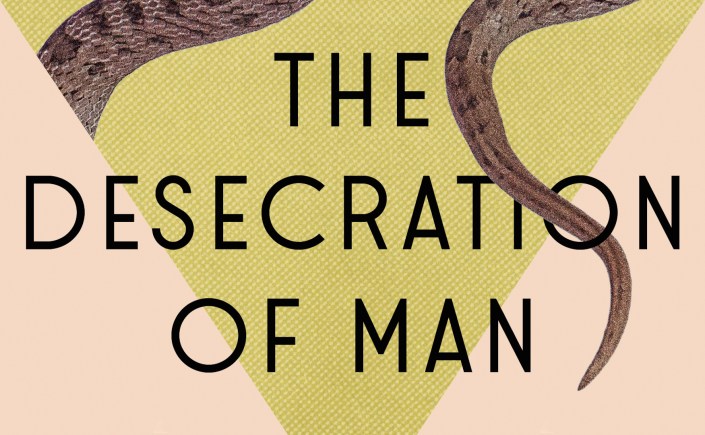
In his book, The Desecration of Man: How the Rejection of God Degrades Our Humanity, Carl Trueman (author of books like The Creedal Imperative) argues that we, as a society, have “killed God” (not in a metaphysical but in a Nietzschean sense) and therefore inevitably find ourselves desecrating his image, i.e., humanity.
Here I’d like to share one specific insight from the book’s last chapter. Trueman describes those who
…claim adherence both to the creed [orthodox Christian beliefs] and to the cult [Christian worship], but who eschew the code [Christian morality and ethics]. Certain groups within the broader church who connect Christianity to political positions that advocate racial segregation, for example, or the use of violence to achieve political ends fall into this category. … [T]he spirit that negates is alive and well, even among some who claimed to be conservative Christians. They may honor creed and cult at least in theory, but when they indulge in the same kinds of attitudes and behavior that characterize our culture of desecration, whether comparatively trivial online crudity directed at critics or more seriously a Nietzschean obsession with power, they deny the code. They dehumanize their opponents and thus desecrate the image of God that those others represent. They too, therefore, indulge in desecration and form part of the problem. Indeed, if the problem in our society is not one between conservatives and progressives but between different kinds of desecrator, then the issue so many conservatives are worried about, the future of Western civilization, becomes immediately more complicated. How can one “save” Western civilization when one plays by essentially the same rules of desecration as those accused of trying to destroy it?
…
There is no quick fix here. The right election result or supreme court appointment will not alter the underlying conditions, at least in the short-to-medium term. And that means the temptation to grow angrier and adopt more and more the techniques of desecration in order to “win” will become intense. But that merely breeds yet more desecration. Second, if we are playing the long game—and whatever the online bluster, we really have no choice—then we need to think about incremental transformation of those spheres in which we do have influence, the real embodied neighborhoods, communities, and institutions where we find ourselves. That’s where something like hospitality becomes important. When we eschew the idioms and techniques of the world around us, and open ourselves and our homes to others, we become truly human and indeed treat others as truly human as well. The battle against desecration does not begin so much with boycotts against blasphemous art as with acts of human kindness extended to neighbors. … Hospitality is powerful and transformative, and it is just one, albeit powerful, example of how to treat other people as human beings and not as objects, things, or simply the aggregates of their beliefs on political, cultural, or social issues.
…
One cannot believe the Apostles’ Creed, recite it in church on a Sunday, and then treat others with snarling contempt for the rest of the week. One cannot believe that the cross is God’s strength made perfect in weakness and exalt the crucified Christ in praise at evensong while adopting attitudes to power and methods of engagement outside of the church service that [closer] are to Nietzsche than the New Testament.1
- I transcribed this quotation from an audio version of the book. So there are likely differences between it and the written form, such as differences in punctuation, paragraph breaks, or even unintended transcribal mistakes on my part. ↩︎
Discover more from Kirk E. Miller
Subscribe to get the latest posts sent to your email.

