A Tabular Comparison of the Westminster Confession of Faith (1646) and the Second London Baptist Confession of Faith (1689)

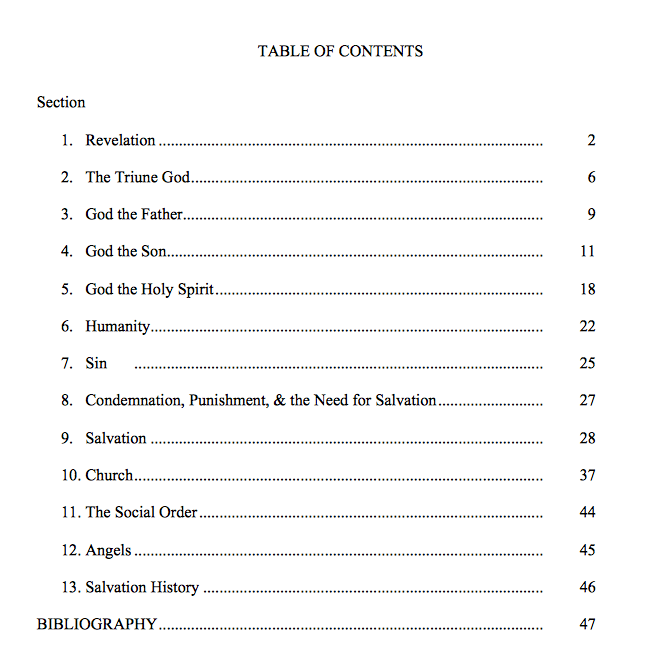
I found this tabular comparison between the Westminster Confession of Faith (1646) and the Second London Baptist Confession of Faith (1689) by James N. Anderson and thought I’d share it in case anyone else might find it useful.

For those of you who don’t know, in the 17th century, English Baptists constructed an original confession now called the First London Baptist Confession of Faith (1644). It is Reformed in terms of soteriology (the doctrine of salvation). In other words, it’s ‘Calvinistic’ in the typical sense of how that word is often used today.

However, the authors of this second confession basically reduplicated the Westminster Confession in an attempt to align themselves much more closely to Reformed (specifically Covenant) Theology. In other words, they not only sought to align themselves with Reformed soteriology, but also, to some degree, with Reformed theology more broadly.[1]

Nonetheless, being Baptists, they obviously didn’t reduplicate everything in the Westminster Confession.[2] So, we find differences.

This chart makes it very easy to examine those differences.


Notes

[1] For this reason, New Covenant Theology adheres to the First London Confession but rejects the Second.

[2] Note: baptist distinctives are incompatible with full-on, traditional, Reformed covenant theology by definition of holding to baptist ecclesiology (doctrine of the church).
Jesus’ Accusation of the Temple as a “Den of Robbers” (Jer 7:11) – Ådna, Jostein

I thought this was a very intriguing explanation of Jesus’ accusation of the temple having been made into a “den of robbers,” citing Jeremiah 7:11.

“Jesus’ charge in the accompanying saying that they have made the temple a den of robbers is an allusion to the corresponding accusation by the prophet Jeremiah to his contemporaries in a speech held at the entrance to the temple in Jerusalem approximately in the year 609 b.c. (Jer 7:1–15, cf. Jer 26): “Has this house, which is called by my name, become a den of robbers in your sight? Also I look upon it this way, says the Lord” (Jer 7:11). In his speech Jeremiah blames the people for combining a most outrageous transgression of the commandments of the Lord with a seemingly high esteem for the temple as the house of God. However, when they consider the temple to be an impregnable refuge thanks to God’s presence on Zion, they act the same way as robbers. Robbers seek their den as a safe haven between their operations. When the Judeans who sin and violate God’s will think that his holy site is the place of perfect protection, they have defined the role of the temple to be like a den of robbers. In the quoted oracle God says that from now on he will share the Judeans’ view of the temple, but the consequence that he will draw is quite contrary to theirs. Unless the people repent to a life in harmony with God’s commandments, the temple in Jerusalem will share the destiny of destruction with the previous sanctuary in Shiloh. Some twenty years later the temple in Jerusalem was destroyed. Those listening to Jesus definitely recognized the allusion to Jeremiah 7:11 and the implied threat in his saying [i.e, the destruction of the temple, which is addressed immediately following Jesus’ temple act in what is known as the Olivet Discourse]. To cling stubbornly to the sacrificial cult and seek security in its atoning effect at this hour of eschatological fulfillment brought by Jesus in messianic authority is as deceptive as the schizophrenic conduct of Jeremiah’s contemporaries.”

Ådna, Jostein, “Temple Act,” ed. Joel B. Green, Jeannine K. Brown, and Nicholas Perrin, Dictionary of Jesus and the Gospels, Second Edition (Downers Grove, IL; Nottingham, England: IVP Academic; IVP, 2013), 950.

Key Bible and Theological Reference Tools: Commentaries

This post is a re-blog of my post at Rolfing Unshelved.


This post is part of a series entitled Key Bible and Theological Reference ToolsThis series seeks to provide one with an introduction to some key Biblical and theological reference tools. In this series one will find basic explanations, significant examples, and other information about these reference tools.


Basic Description of Commentaries

A Biblical Commentary is a book that provides an interpretive explanation of a Biblical book or books. Commentaries provide a detailed explanation of specific Biblical passages, an explanation of a Biblical book’s larger structure or argument, and typically engage with introductory matters such as authorship, audience, date of writing, purpose of writing, composition, etc.