When Fighting to “Save” Culture Further Desecrates It | Carl Trueman

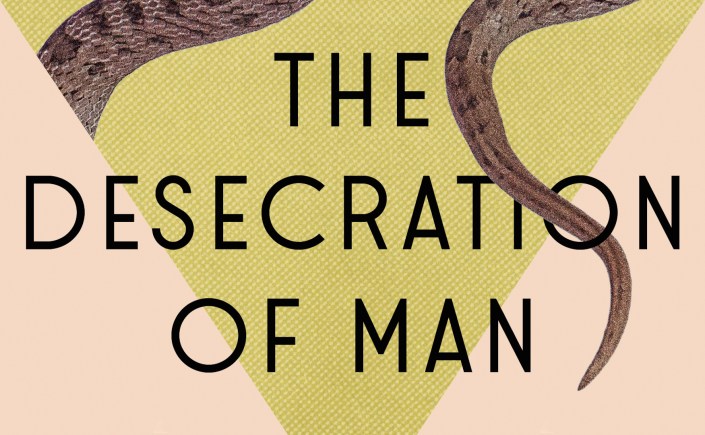
In his book, The Desecration of Man: How the Rejection of God Degrades Our Humanity, Carl Trueman (author of books like The Creedal Imperative) argues that we, as a society, have “killed God” (not in a metaphysical but in a Nietzschean sense) and therefore inevitably find ourselves desecrating his image, i.e., humanity.

Here I’d like to share one specific insight from the book’s last chapter. Trueman describes those who

…claim adherence both to the creed [orthodox Christian beliefs] and to the cult [Christian worship], but who eschew the code [Christian morality and ethics]. Certain groups within the broader church who connect Christianity to political positions that advocate racial segregation, for example, or the use of violence to achieve political ends fall into this category. … [T]he spirit that negates is alive and well, even among some who claimed to be conservative Christians. They may honor creed and cult at least in theory, but when they indulge in the same kinds of attitudes and behavior that characterize our culture of desecration, whether comparatively trivial online crudity directed at critics or more seriously a Nietzschean obsession with power, they deny the code. They dehumanize their opponents and thus desecrate the image of God that those others represent. They too, therefore, indulge in desecration and form part of the problem. Indeed, if the problem in our society is not one between conservatives and progressives but between different kinds of desecrator, then the issue so many conservatives are worried about, the future of Western civilization, becomes immediately more complicated. How can one “save” Western civilization when one plays by essentially the same rules of desecration as those accused of trying to destroy it?

… 

There is no quick fix here. The right election result or supreme court appointment will not alter the underlying conditions, at least in the short-to-medium term. And that means the temptation to grow angrier and adopt more and more the techniques of desecration in order to “win” will become intense. But that merely breeds yet more desecration. Second, if we are playing the long game—and whatever the online bluster, we really have no choice—then we need to think about incremental transformation of those spheres in which we do have influence, the real embodied neighborhoods, communities, and institutions where we find ourselves. That’s where something like hospitality becomes important. When we eschew the idioms and techniques of the world around us, and open ourselves and our homes to others, we become truly human and indeed treat others as truly human as well. The battle against desecration does not begin so much with boycotts against blasphemous art as with acts of human kindness extended to neighbors. … Hospitality is powerful and transformative, and it is just one, albeit powerful, example of how to treat other people as human beings and not as objects, things, or simply the aggregates of their beliefs on political, cultural, or social issues.

… 

One cannot believe the Apostles’ Creed, recite it in church on a Sunday, and then treat others with snarling contempt for the rest of the week. One cannot believe that the cross is God’s strength made perfect in weakness and exalt the crucified Christ in praise at evensong while adopting attitudes to power and methods of engagement outside of the church service that [closer] are to Nietzsche than the New Testament.1


  1. I transcribed this quotation from an audio version of the book. So there are likely differences between it and the written form, such as differences in punctuation, paragraph breaks, or even unintended transcribal mistakes on my part. ↩︎

Strange New World & The Rise and Triumph of the Modern Self by Carl Trueman | Book Recommendation

The speed at which the recent sexual and gender identity revolutions have overtaken culture is staggering. How did we get to the point where, for instance, a statement like “I am a man trapped in a woman’s body” can now be spoken and understood, whereas even a generation ago this string of words wouldn’t have been seen as intelligible? Yet now we all know what is meant. What conditions laid the groundwork for such ideas to take hold–and not just take hold, but so quickly?

In 2020 Carl Trueman released his award-winning book, The Rise and Triumph of the Modern Self: Cultural Amnesia, Expressive Individualism, and the Road to the Sexual Revolution. And now he has published a shorter and more accessible treatment of this topic, Strange New World: How Thinkers and Activists Redefined Identity and Sparked the Sexual Revolution (March 2022). In these two books, Trueman guides us through both the philosophical trends and societal factors that have moved our modern culture toward this era of “expressive individualism.” He shows us that the sexual revolution and its accompanying identity politics are just the most recent symptoms of these larger shifts in how we’ve come to conceive of human nature.

Carl Trueman on Hollywood’s Moral Contradiction Amidst the Weinstein Scandal

There is, of course, an irony in this [i.e., Hollywood’s condemnation of Weinstein]. Hollywood has done as much as any cultural institution to demystify sex and turn it into a recreational activity. That is the consistent message of many of its movies. Yet in the Weinstein debacle, Hollywood’s most powerful players are implicitly acknowledging that they have promoted a lie, because sex is more than a game.

It is not just the lack of consent that makes Hollywood types, and all the rest of us, regard sexual assault as so heinous. We instinctively know that to slap someone’s face without their consent, unpleasant as that may be, is not as traumatic as to rape them. Sexual assault is deeply significant because … sex is deeply significant, and intrinsically so—and no amount of pop-culture trivialization can remove this stubborn fact. …

… [E]ven in our ‘sex as recreation’ era, its significance is still acknowledged in the fact that sex crimes are considered by society to be among the most heinous. If any good has come from the crimes of Weinstein, it is in the fact that the champions of sex as recreation are being forced to contradict the philosophy of their own artworks.

Read the entire piece by Carl Trueman here.

“What Can Miserable Christians Sing?” (Carl Trueman)

In Carl R. Trueman’s book The Wages of Spin: Critical Writings on Historical and Contemporary Evangelicalism, he included a chapter entitled,”What Can Miserable Christians Sing?”

The answer to that question, Trueman answers, is the Psalms and specifically the Psalm’s model of lamentation.

Of this short chapter Trueman states,

This little piece which took minimal time and energy to author has garnered more positive responses and more touching correspondence than anything else I have ever written. It resonated with people across the Christian spectrum, people from all different church backgrounds who had one thing in common: the understanding that life has a sad, melancholy, painful dimension which is too often ignored and sometimes even denied in our churches.

He describes his purpose for writing as

to highlight what I saw as a major deficiency in Christian worship, a deficiency that is evident in both traditional and contemporary approaches: the absence of the language of lament. The Psalms, the Bible’s own hymnbook, contains many notes of lamentation, reflecting the nature of the believer’s life in a fallen world. And yet these cries of pain are on the whole absent from hymns and praise songs.

CarlTruemanHe sums up the thrust of that chapter as follows:

There is nothing in the typical book of hymns or praise songs that a woman who has miscarried a baby, or a parent who has just lost a child to cancer, can sing with honesty and integrity on a Sunday.

The desperation and heartache of such moments are things which we instinctively feel have no place in a religion where we are called on to rejoice in the Lord always. Yet there is a praise book which taps such emotions and gives the broken-hearted honest words with which to express their deepest sorrows to God.

It’s called the book of Psalms; and its recovery as a source of public praise in the Christian church can only help the church overcome its innate triumphalism and make room for the poor and the weak.

In short, he says, in the Psalms “one finds divinely inspired words which allow the believer to express their deepest pains and sorrows to God.”

Continue reading