In this episode of Logos Live, I sat down with Nancy Guthrie to talk about what theologians call the “intermediate state.” We ask, “Is going to heaven when you die” the full picture? Join us for a conversation about life after death, the resurrection, and the new creation.
Check out the full episode and accompanying article.
What exactly did Jesus’ resurrection accomplish and why does it matter? This Training Seminar (via YouTube Playlist) seeks to provide a survey of the Bible’s teaching on the significance of Jesus’ resurrection.
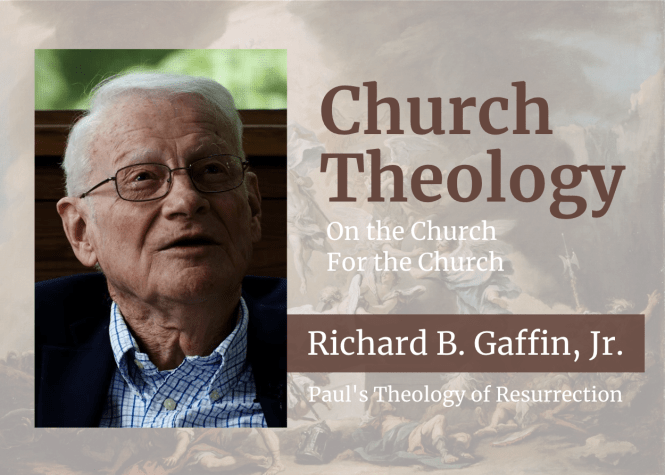
How did Paul think about resurrection, and what role did it play in his overall theological understanding? Kirk sits down for a conversation with retired professor, Dr. Richard Gaffin, about Paul’s theology of resurrection. We explore questions like, what is the connection between Christ’s resurrection and ours? What is the relationship between Christ’s resurrection and the ministry of the Spirit in our lives? What does Paul mean when he says that Jesus was “raised for our justification” (Rom 4:25)? And how does Christ’s resurrection empower us for our mission as a church?
The Old Testament tells a unifying story of God working to restore his creation and establish his kingdom. This would finally happen permanently and irreversible at the end of history, the “last days.” But the New Testament presents this time as already having dawned in the arrival of Christ. We are living in those “last days,” as Peter said (Acts 2). Premier New Testament scholar, G.K. Beale, visits the Church Theology podcast to talk about the New Testament’s “inaugurated eschatology,” or as George Eldon Ladd put it, “the presence of the future.”
If we are to read each portion of scripture in view of the broader story of scripture, then what is that bigger story? What is the overarching storyline of the Bible? In this episode, we cover the next three epochs of that overarching story: Jesus’ arrival, the church and her mission, and Christ’s second coming.


 Kirk E. Miller