“Perhaps the best thing that can come out of the gay marriage decision is for the church to make a final break between our faith and our nation.”
Government & Politics
Goodreads Review of More than Just Race by William J. Wilson
 More than Just Race: Being Black and Poor in the Inner City by William Julius Wilson
My rating: 4 of 5 stars
Good. Provocative. Challenging.
Thesis – “The experience of poor, inner-city blacks represent the influences of more than just race.” Their responses and situation “stem from the linkage between new structural realities, changing norms, and evolving cultural patterns.” (pg. 131)
Wilson’s critique – The politically liberal tend to focus on structural realities to the neglect of cultural realities. Arguments based on culture tend to be taboo for them. The politically conservative tend to focus on individual responsibility and cultural realities to the neglect of prevailing structural realities built into America’s history of racial tension and segregation. Both of these approaches are inadequate.
Wilson’s assessment – Wilson addresses both structural and cultural realities and discusses the relationship between the two as he seeks to assess the situation of the inner-city poor black community in America. On structural realities relationship to culture, he states, “Culture mediates the impact of structural forces such as racial segregation and poverty.” (pg. 133) And on cultures relationship to structural realities, he states, “The behavior generated by these autonomous cultural forces often reinforces the very conditions that have emerged from structural inequities.” (pg. 134)
Notes on Jordan Ballor and Stephen Long on Theology and Economics
Last night I went to a lecture and responding lecture hosted by the Carl F.H. Henry Center for Theological Understanding at Trinity Evangelical Divinity School. The lecture, presented by Jordan Ballor, was entitled “Theology and Economics: A Match from Heaven?” The response came from Stephen Long.
Read more about this lecture here.
View video of the lectures here.
The following are some thoughts and notes I wrote down during this discussion.
 Jordan Ballor // Thesis – That economics and theology are fundamentally compatible and mutually dependent. A continued separation or divorce between economics and theology would be harmful. We need economically informed theologians and theologically informed economists.
Continue reading
“Carl Henry Was Right” by Richard Mouw
Carl F H. Henry proposed 5 principles to guide the church on social issues:
- The Bible is critically relevant to the whole of modern life and culture—the social-political arena included.
- The institutional church has no mandate, jurisdiction, or competence to endorse political legislation or military tactics or economic specifics in the name of Christ.
- The institutional church is divinely obliged to proclaim God’s entire revelation, including the standards or commandments by which men and nations are to be finally judged, and by which they ought now to live and maintain social stability.
- The political achievement of a better society is the task of all citizens, and individual Christians ought to be politically engaged to the limit of their competence and opportunity.
- The Bible limits the proper activity of both government and church for divinely stipulated objectives—the former, for the preservation of justice and order, and the latter, for the moral-spiritual task of evangelizing the earth.
From Richard Mouw, “Carl Henry Was Right.”
Christian Living in a Post-Christendom America
The following is a modified manuscript/outline from a sermon I preached on 1 Peter 2:11-25 at Lake Drive Baptist Church in December 2013.
____________________
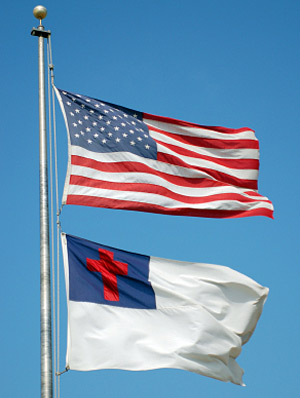 I’ve entitled my sermon, “Christian Living in a Post-Christendom America.” What do I mean by “christendom”? “Christendom” refers to the “Christian Empire,” where Christianity is associated with the state, promoted by the state, or the dominant religion within the state.
In a sense, one could have previously referred to America as a form of this Christendom. But now days, it’s quite clear that we live in a post-Christendom America. –Not only non-Christian, but even increasingly anti-Christian.
A mere casual awareness of the news makes one aware of the rapid pace of secularization in our country. For example, only 17 years after President Clinton signed DOMA into law, President Obama successfully pushed for its repeal. And keep in mind, he entered office opposed to gay marriage. And the rapidness of this shift only mirrors trends in the general population. Or again, it only takes a brief glance at recent headlines to demonstrate this:
- “Starbucks Enters Same-Sex Marriage Boycott Wars.”
- “Supreme Court Will Consider Hobby Lobby Contraception Mandate Case.”
- Referring to Chick-Fil-A: “‘Eat More Ignorance’ Is More Like It.”
- “Southern Baptists Convention Fighting ‘Don’t Ask, Don’t Tell’ Repeal.”“Should the Boy Scouts of America Lift Its Ban on Gay Members?”
- “New Mexico Supreme Court Unanimously Rules Against Discriminating Anti-Gay Photographer.”
- “Judge Orders Colorado Bakery to Cater for Same-Sex Weddings.”
- “‘Duck Dynasty’ Star Suspended for Anti-Gay Remarks.”
And without necessarily endorsing any of the parties in these conflicts– And no matter what you think about these controversies on a political level, they nonetheless indicate an increasing hostility and threat to Christian thought and values. … We live in an ever-increasingly secular culture.
So, how are we as Christians to respond? What does Christian living look like in a post-Christendom America? 1 Peter has much to say about how Christians should live within a non-Christian and even anti-Christian society.
 Kirk E. Miller