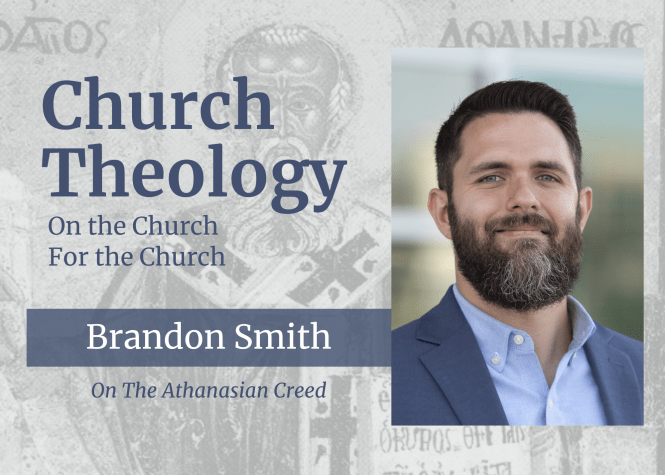
The Athanasian Creed (with Brandon Smith)

The Athanasian Creed famously confesses, “We worship one God in Trinity, and Trinity in Unity; Neither confounding the Persons nor dividing the substance.” But what exactly does this mean that God is one and yet three persons? And why is The Athanasian Creed so concerned about the doctrine of the Trinity as it relates to our salvation? In this episodes Kirk is joined by Brandon Smith to discuss these questions and more!

(We apologize for the poor quality audio on Kirk’s end. His computer was experiencing a technical problem during the recording which affected the audio.)

Access the episode here. (Available on Apple Podcasts, Spotify, Google Podcasts, Stitcher, and more.)

See all other episodes in this series.

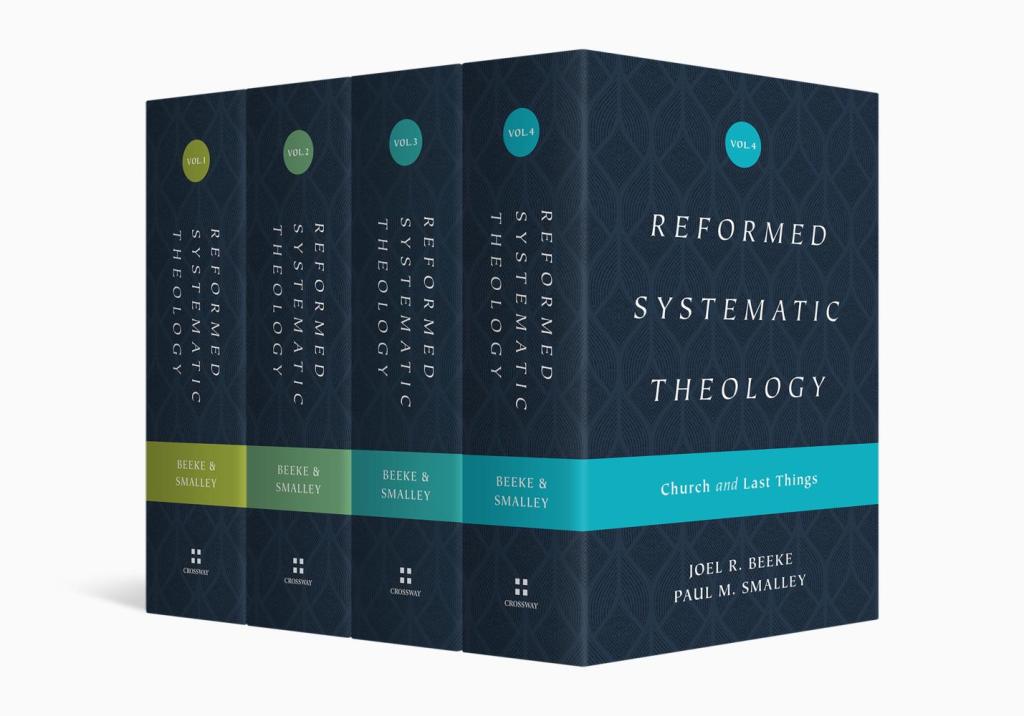
A Reading Plan: Reformed Systematic Theology by Joel Beeke and Paul Smalley

Crossway was kind enough to send me a review copy of Joel Beeke and Paul Smalley’s recently completed, four-volume Reformed Systematic Theology. Altogether it’s a hefty 5,216 pages.

I’ve created a reading plan that I thought I’d share in case others might benefit. The plan is currently set up with one chapter assigned per day, meaning one can complete all four volumes in a little less than seven months. However, one can adjust the spreadsheet according to preference.

How God Hates Divorce: His Merciful Allowance in a Fallen World

God hates divorce.

But that does not mean he opposes all divorce.

No, divorce was never God’s original intention for marriage. Divorce was not part of the equation when he created marriage: “from the beginning it was not so,” as Jesus said quoting Gen 2:24 (Matt 19:9).

Nonetheless, on this side of the fall, we find in scripture that, in his mercy, God gives certain allowances for divorce.

My experience as a pastor, counseling people with abusive spouses, helped me better understand God’s hatred of divorce. I’m not saying experience determines our theology or should be used to overrule scripture. But sometimes experience can expand our understanding.

God always hates divorce. But sometimes he hates it because it’s unwarranted, it’s wrong to pursue, he doesn’t allow it (like in Malachi 2:16). In other instances though, God hates divorce because, although he warrants it, he nonetheless hates the sin that made it warranted.

In other words, all divorce involves sin. But not all divorce is sinful.

I’ve seen first hand the negative impact when pastors fail to grasp this. Very practically, they see divorce as a greater evil than the abuse the spouse is enduring. Divorce is never seen as God’s mercy to the abused spouse.

Divorce is never the outcome we want for any marriage. But sometimes it’s God’s mercy in a fallen world—”because of your hardness of heart,” as Jesus says (Matt 19.8).

The Chalcedonian Definition (with Stephen Wellum)

Delegates from throughout the ecumenical (universal or “catholic”) church met in Chalcedon in 451 AD to address the emergence of certain heresies surrounding the person and nature of Christ. Some were teaching that Jesus merely took on the material aspects of a human body (Apollinarianism). Others so distinguished Jesus’ humanity and divinity that they conceived of each as involving a distinct person (Nestorianism). Finally, some so emphasized Christ’s unity that they spoke of his divinity blending with his humanity to form a new mixed nature (Eutychianism or Monophysitism). The Council of Chalcedon thus responded to these errors, producing a confession of orthodoxy known as The Chalcedonian Definition (or the Symbol of Chalcedon). It affirmed that the incarnate Christ is one person with both a human and divine nature.

But why does this statement matter, and are its distinctions all that important? What, if anything, can we learn from it today? Dr. Stephen Wellum joins Kirk in this episode to discuss the meaning and significance of this important historical document.

Access the episode here. (Available on Apple Podcasts, Spotify, Google Podcasts, Stitcher, and more.)

See all other episodes in this series.
The Nicene Creed (with Matthew Barrett)

What was is The Nicene Creed and why does it matter? In this episode, Dr. Matthew Barrett joins Kirk to discuss the historical circumstances that gave rise to the creed as well as some of its central confessions. They discuss why it matters that Jesus is “of the same substance with the Father” and “eternally begotten” but “not made.” The Nicene Creed gives us categories by which to understand God’s self-revelation in scripture as it finds its center in the saving work of Christ.

Access the episode here. (Available on Apple Podcasts, Spotify, Google Podcasts, Stitcher, and more.)

See all other episodes in this series.