Preaching Christ in the Old Testament: A Look Forward to the Upcoming Table Talk with Dr. Scharf and Dr. Luy

This post was originally published at Rolfing Unshelved.


On Wednesday, November 11 from 12-1:15 pm at the front of the library, Dr. Scharf and Dr. Luy will be facilitating a discussion on preaching Christ in the Old Testament. We will be examining some of the different perspectives and issues involved in that endeavor. Because of the complexity of this topic and the many subjects it raises to our attention, Dr. Scharf and Dr. Luy will begin the Table Talk by making some brief introductory comments. These initial remarks will serve to focus subsequent discussion. And after discussing these matters in groups, we look forward to a time of interaction with Dr. Luy and Dr. Scharf on further questions and group observations.

I hope that you will bring your lunch and join us!

This blog post seeks to introduce you to the subject at hand–preaching Christ in the Old Testament–and to expose you to some of the issues involved in that conversation.


As Dr. Scharf recently wrote me in an email,

The practice of preaching Christ in the Old Testament raises a host of questions and subjects the preacher to significant perils as well as offering great promise. Navigating these waters requires that the preacher have a defensible theology, a valid hermeneutic, and exegetical expertise (enriched ideally by a grasp of the history of interpretation of the preaching text) as well as a love for his or her listeners, the required spiritual gifting, and prayerful reliance upon the Holy Spirit.

You’ll immediately notice from his statement that the issues involved here are multi-faceted.

Continue reading

Graham Cole on Christianity and Contemporary Sexualities: A Table Talk Prelude

This post was originally published at Rolfing Unshelved.


On Tuesday Cole delivered a “Dean’s Hour” lecture entitled “Following Christ in a LGBTIQQAAP’s World.” In many ways, this talk served as an introduction to the conversation that will continue at the Table Talk on October 21st.

In this post I’d like to relay some of the key points of this recent talk as a way to stimulate your thinking and prepare you for further conversation at our Table Talk.


First, Dr. Cole addressed the context in which we engage these matters.

(A) For many of us, these matters are extremely personal. Either we experience same-sex attraction ourselves or we know others–friends, family members–who do. We cannot engage this issue as a purely theoretical one.

(B) Furthermore, we engage this issue in a drastically changing culture, a culture of which the fast-past political changes are symptomatic. We live in a world in which these matters are cast as civil rights issues and opposition to them is addressed with a shaming rhetoric and ostracizing actions.

Continue reading

A Review of Gustaf Aulén’s Christus Victor

The following is the manuscript-outline notes of a presentation I delivered on September 8th for Dr. David Luy’s ST 8000 The Atonement at Trinity Evangelical Divinity School.

The full title of this presentation was Synthetic Re-Description of and Critical Engagement with Christus Victor: An Historical Study of the Three Main Types of the Idea of Atonement by Gustaf Aulén.

I share this in case anyone might find this edifying or for the chance someone studying Aulén’s work might stumble upon this and find it helpful.

And I dedicate this to my grandfather, who, while I was in the process of writing this, told me to “add some jokes.” I hope I have accomplished that, although I admit the jokes may only be humorous to a very narrow audience.


I. Building Consensus

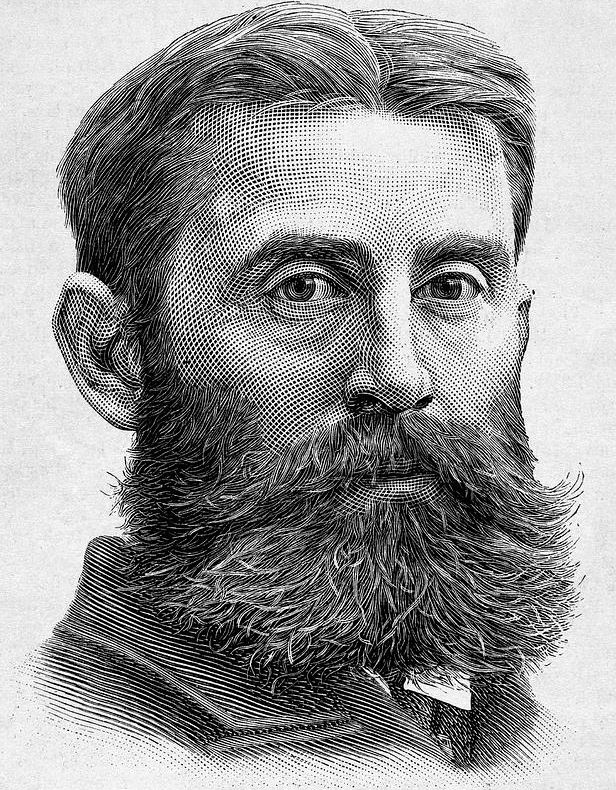
Gustaf AulenGustaf Aulén (1879–1997) was the Bishop of Strängnäs in the Church of Sweden (a Lutheran denomination), was a leading figure in the Lundensian Theology movement, and is probably best known for this work, Christus Victor.
Origin of Christus Victor – The book Christus Victor originated from a series of lectures delivered at the University of Uppsala in Sweden in 1930 (xxi).

Goal – Aulén claims that the aim of this book is to produce an objective historical account without any clandestine apologetic aims (158; cf. xxi). Having read the book, I imagine many of us can’t help but chuckle at such a claim. I myself wonder if he is somewhat disingenuous.[1] But I suppose we’ll have to take Aulén at his word. With that said, if I were to imagine myself in a world where such objective accounts could actually exist, I would argue that Aulén has failed to produce one. His bias is oozing through the text.

Thesis – The thesis that Aulén seeks to prove through this historical account is that the “classic view” of the atonement, in contrast to what he refers to as the “Latin” and “Humanist” views, is the view of the atonement which is “most genuinely Christian” (xxi, 158), evangelical, and catholic (xxvi). It is the truly Christian view because, as his historical count seeks to demonstrate, it is the view found in the New Testament, articulated by the early church fathers, and recovered by the thoroughly evangelical Luther.

Three views [Aulen’s depiction, not mine]: Continue reading

Goodreads Review of Four Views on Moving beyond the Bible to Theology by Stanley N. Gundry

Four Views on Moving beyond the Bible to TheologyFour Views on Moving beyond the Bible to Theology by Stanley N. Gundry

My rating: 4 of 5 stars

As always, these multiple views books can be a bit disjointed, especially when the editors fail to ensure that all the contributors are the same page (which they often do; come on, editors!). This book is probably a little guilty of some of that, because, as Al Wolters demonstrates on his essay, the contributors seem to mean different things by “moving beyond the Bible.” Thus, at times, the work is less of a presentation on competing views–although there is certainly some of that–and more of a collection of generally complementary essays addressing a range of related issues.

Overall, though, I felt like this book was one of the better multiple views books I’ve read. The essays were overall well written, provocative, and stimulating.

View all my reviews

The Religious Life of Theological Students by Benjamin B. Warfield

The fall semester is soon approaching. In light of that, I thought I’d share Benjamin B. Warfield’s short (public domain) essay on the religious (or what we might today call, “spiritual”) life of students of theology.


WarfieldA minister must be both learned and religious. It is not a matter of choosing between the two. He must study, but he must study as in the presence of God and not in a secular spirit. He must recognize the privilege of pursuing his studies in the environment where God and salvation from sin are the air he breathes. He must also take advantage of every opportunity for corporate worship, particularly while he trains in the Theological Seminary. Christ Himself leads in setting the example of the importance of participating in corporate expressions of the religious life of the community. Ministerial work without taking time to pray is a tragic mistake. The two must combine if the servant of God is to give a pure, clear, and strong message.

* * * * *

On Not Divorcing Theological Studies from the Religious Life*

I am asked to speak to you on the religious life of the student of theology. I approach the subject with some trepidation. I think it the most important subject which can engage our thought. You will not suspect me, in saying this, to be depreciating the importance of the intellectual preparation of the student for the ministry. The importance of the intellectual preparation of the student for the ministry is the reason of the existence of our Theological Seminaries. Say what you will, do what you will, the ministry is a “learned profession”; and the man without learning, no matter with what other gifts he may be endowed, is unfit for its duties. But learning, though indispensable, is not the most indispensable thing for a minister. “Apt to teach”—yes, the ministry must be “apt to teach”; and observe that what I say—or rather what Paul says—is “apt to teach.” Not apt merely to exhort, to beseech, to appeal, to entreat; nor even merely, to testify, to bear witness; but to teach. And teaching implies knowledge: he who teaches must know. Paul, in other words, requires of you, as we are perhaps learning not very felicitously to phrase it, “instructional,” not merely “inspirational,” service. But aptness to teach alone does not make a minster; not is it his primary qualification. It is only one of a long list of requirements which Paul lays down as necessary to meet in him who aspires to this high office. And all the rest concern, not his intellectual, but his spiritual fitness. A minister must be learned, on pain of being utterly incompetent for his work. But before and above being learned, a minister must be godly.

Continue reading