In this episode of Logos Live, I sat down with Mark Barnes to talking about responsible use of AI in Bible study and ministry.
Wisdom Literature
The Message of Ecclesiastes (with Bobby Jamieson)
What is the message of Ecclesiastes, and how should we interpret this puzzling book? In this episode of Logos Live, I talk with Bobby Jamieson about his new book, Everything Is Never Enough: Ecclesiastes’ Surprising Path to Resilient Happiness.
Now Walk: The Theme of “Walking” in Ephesians
The following notes are from a lesson I put together for CrossWay’s 2023 men’s retreat.
“Walking” is one of the most frequently used images in the entire Bible (not just by Paul, but especially by him). And we continue to use it even today (e.g., “How’s your walk with the Lord?”).
Understand the Imagery
Uses of “walk” in Ephesians:
- 2:2 – We once walked in trespasses and sins.
- 2:10 – God has created us in Christ and prepared for us to walk in good works.
- 4:1 – We are to walk in a manner worthy of our calling.
- 4:17 – We must no longer walk as the Gentiles (those who aren’t God’s people) do.
- 5:2 – We are to walk in love, as Christ loved us and as imitators of God (5:1).
- 5:8 – Since we are no longer darkness but light, we must walk as children of the light.
- 5:15 – We must look carefully how we walk, not as unwise but wise, making the best use of the time (5:16).
Introduction to the imagery:
“In biblical times walking was the most common way of going somewhere, even over long distances. … Beyond the literal mechanics of movement by foot, walking at a more figurative level becomes a prime metaphor for … a person’s lifestyle (with the image of walking suggesting continuing progress in time and in a chosen direction). … Passages such as these use the metaphor of walking to identify a person’s conduct of life and the results that flow from it.”
—Dictionary of Biblical Imagery
Consider how ubiquitous walking would have been for people in the ancient world—such a pervasive image for all aspects of their lives. And consider how much Paul him (author of Ephesians) would be familiar with the act of walking (traveling the Roman Empire during his missionary journeys in Acts).
Continue readingThe Method of Ecclesiastes (Ecclesiastes, Ep. 1)
 Kirk and Dan begin there series on the book of Ecclesiastes. In this episode they look at the method that Ecclesiastes uses to communicate its message, namely how it functions as a unique expression of wisdom literature.
Access the episode here (available on Apple Podcasts, Spotify, Google Podcasts, Stitcher, and more).
See all other episodes in this series.
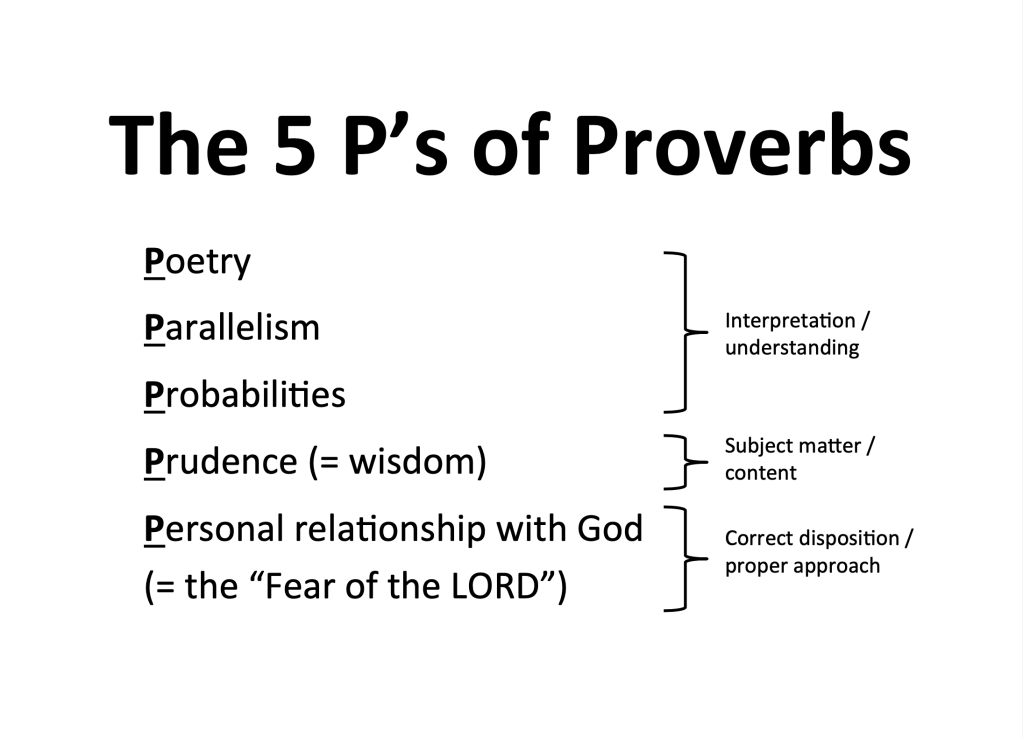
The Five P’s of Proverbs
The following is a resource I put together for use at the Milwaukee Rescue Mission to help me get acquainted with the book of Proverbs.
 Kirk E. Miller