Although we believe the same things concerning our faith, Christians nonetheless often differ in their politics. How can this be? And when it does happen, how can we love those with whom we disagree? These are the exact questions Andy Naselli and Jonathan Leeman seek to answer in this short, practical book.
In a world in which our consumption of news is increasingly polarized and sensational, and disinformation is all too common, how do we combat such unhealthy habits to form a better relationship with the news? And what, after all, is the news even for? What is a particularly Christian mode of engaging and consuming news? In his book, Reading the Times: A Literary and Theological Inquiry Into the News, Jeffrey Bilbro provides a theological, even historical, perspective on the function and impact of the news in our lives, a diagnosis of our problem, and a reframing of how we might construct alternative practices.
A Christian Vision for Racial Solidarity: An Alternative to Hostility, Hysteria, and Apathy Christian Camp and Conference Association Wisconsin Sectional Annual Conference March 15th, 2022
Lately, our society has witnessed increased attention and concern for matters of racial justice. Of course, as Christians, the equitable treatment of others aligns with our deepest moral convictions. However, many in society, including some Christians, have raised an alarm around this racial reckoning. Other Christians experience frustration or despair, interpreting this reaction as an attempt to hijack and derail progress on race. Where are Christians to begin when so many are given over to hysteria, hostility, and apathy? And how might the Bible and a Christian worldview lead us to a better alternative–namely, racial solidarity?
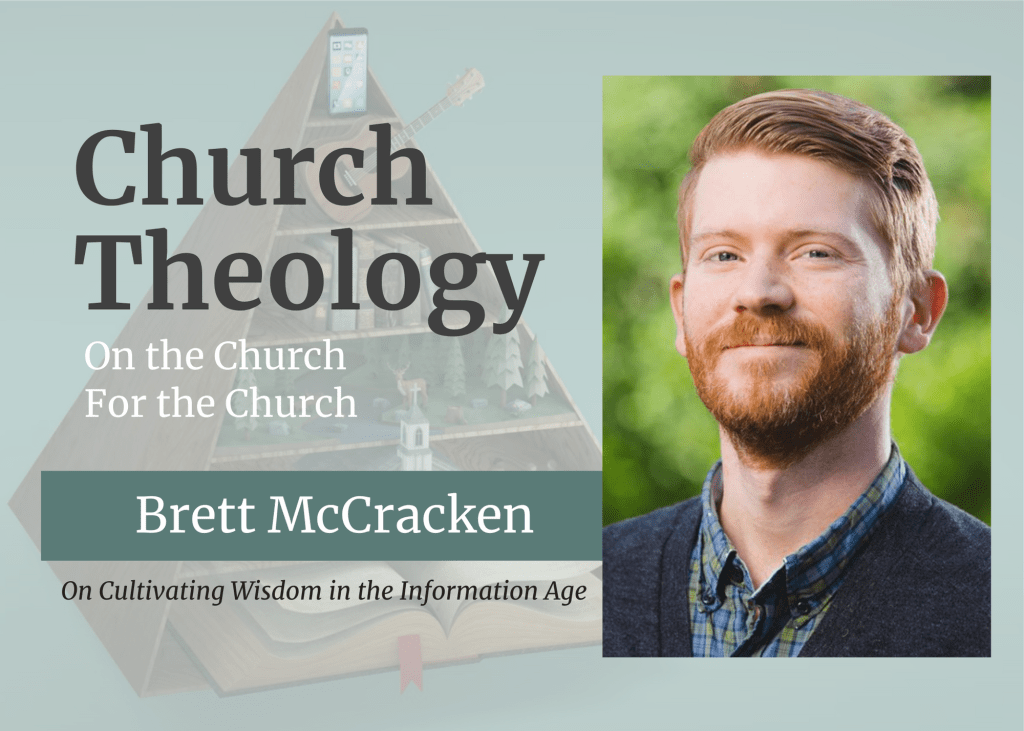
Do you ever feel like the constant bombardment of technology and social media is making us dumber, or maybe even more foolish? Or does truth feel ever more elusive to you in an age of increasing options, viral conspiracy theories, and personally curated newsfeeds? How are we to navigate this post-truth world? Brett McCracken joins Kirk for a conversation about his most recent book, The Wisdom Pyramid: Feeding Your Soul in a Post-Truth World. Listen in as Brett gives us guidance on finding wisdom and feeding our souls amidst the information gluttony, perpetual novelty, and “look within” autonomy.
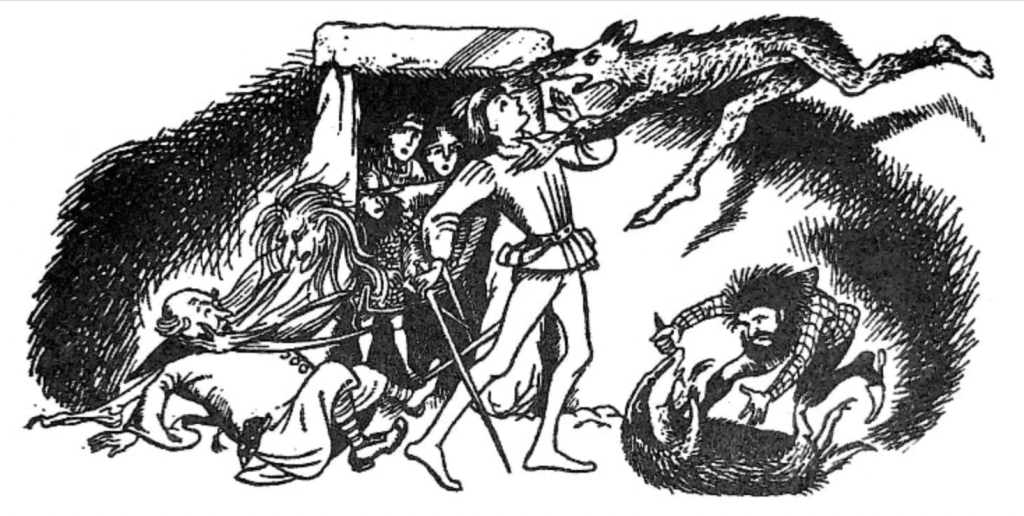
C.S. Lewis’ Prince Caspian (New York: Scholastic Inc., 1979) tells the story of a young Prince Caspian who must win back his kingdom against his evil Telmarine uncle, Miraz.
Early on in his ventures, one of Caspian’s comrades, a dwarf named Nikabrik, hints at his true colors (p. 77):
“Do you believe in Aslan?” said Caspian to Nikabrik.
“I’ll believe in anyone or anything,” said Nikabrik, “that’ll batter these cursed Telmarine barbarians to pieces or drive them out of Narnia. Anyone or anything, Aslan or the White Witch, do you understand?”
Finding themselves in dire straights, Caspian blows Susan’s magical horn in expectation that it will summon help, either of Aslan himself or the Pevensie children, Peter, Susan, Edmund, and Lucy (pp. 95–96).
But Nikabrik eventually grows impatient (pp. 163–144):
”Whether it was that the Horn was blown too late, or whether there was no magic in it, no help has come. You, you great clerk, you master magician, you know-all; are you still asking us to hang our hopes on Aslan and King Peter and all the rest of it?” …
“The help will come,” said Trufflehunter. “I stand by Aslan. Have patience, like us beasts. The help will come. It may be even now at the door.”
“Pah!” snarled Nikabrik. “You badgers would have us wait till the sky falls and we can all catch larks. I tell you we can’t wait. Food is running short; we lose more than we can afford at every encounter; our followers are slipping away.”
Nikibrik proposes an alternative, wanting to take matters in his own hands (pp. 166–168):
“Well, Nikabrik, ” [Prince Caspian] said, “we will hear your plan.” …
“All said and done,” he [Nikabrik] muttered, “none of us knows the truth about the ancient days in Narnia. Trumpkin believed none of the stories. I was ready to put them to the trial. We tried first the Horn and it has failed. If there ever was a High King Peter and a Queen Susan and a King Edmund and a Queen Lucy, then either they have not heard us, or they cannot come, or they are our enemies—”
“Or they are on the way,” put in Trufflehunter.
“You can go on saying that till Miraz has fed us all to his dogs. As I was saying, we have tried one link in the chain of old legends, and it has done us no good. Well. But when your sword breaks, you draw your dagger. The stories tell of other powers beside the ancient Kings and Queens. How if we could call them up?” ….
“Who do you mean?” said Caspian at last.
“I mean a power so much greater than Aslan’s that it held Narnia spellbound for years and years, if the stories are true.”
“The White Witch!” cried three voices all at once….
“Yes, said Nikabrik very slowly and distinctly, “I mean the Witch. … We want power: and we want a power that will be on our side. … They say she ruled for a hundred years: a hundred years of winter. There’s power, if you like. There’s something practical.”
As I read the above section from C.S. Lewis’ Prince Caspian this evening, I couldn’t help but think of how it unfortunately seemed to parabolize much of the current posture of contemporary, American evangelicalism. We’re pragmatic over principled. Over against the “foolish” call to cruciformly, we’re entangled in a love affair with the corrupting influence of power. We want power—who cares if that power happens to be the “White Witch”?
Luckily, Prince Caspian and crew have the wherewithal to see through Nikabrik’s proposal, and they dismantle his plot right then and there. May we have the foresight in this moment to revive our call and do the same.



 Kirk E. Miller