Children & Dangerous Ministry (John Piper)

Should we engage in ministry and pursue the mission even when it might involve putting ourselves in potentially harmful situations. Yes. Absolutely. Without a doubt. We do not make an idol out of our welfare and self-preservation.

But what if we have a family? What if doing this sort of ministry and pursuing the mission in this way not only potentially endangers ourselves, but also our family and our children — those of whom Paul says, “[I]f anyone does not provide for his relatives, and especially for members of his household, he has denied the faith and is worse than an unbeliever” (1 Tim 5:8).

John Piper — “Short answer: Yes.”

Why? Because the cause is worth the risk, and the children are more likely to become Christ-exalting, comfort-renouncing, misery-lessening exiles and sojourners in this way than by being protected from risk in the safety of this world.

Read the article, Risk Your Kids for the Kingdom? On Taking Children to Unreached Peoples.

Stepping Up to the Plate: Every Member a Disciple-Making Disciple (Ephesians 4:7-16)

Stepping Up to the Plate: Every Member a Disciple-Making Disciple (Ephesians 4:7-16)
South City Church
August 27, 2017

Podcast link.

This sermon is a part of a series on the foundational principles of South City Church’s philosophy of ministry. See all content from this series.

Seminary–You’re doing it wrong

My seminary--Trinity Evangelical Divinity School.

My seminary–Trinity Evangelical Divinity School.

If you’re doing seminary without significant involvement in a local church, as the saying goes, “You’re doing it [sic] wrong.”

Over the past two years of seminary I’ve become more and more convinced of the church’s importance in my (and others’) seminary education. It takes a church to raise a Christian. And equally so, it takes a church to form a seminarian. As such, I am convinced that going through seminary without significant involvement in a local church (i.e., not just attending, but being involved in ministry) is incredibly harmful to one’s seminary experience and formation process.

Let me share with you at least three reasons why.

1. It’s a needed supplement to your seminary education.

We learn a lot of valuable stuff in seminary. But seminary can’t provide us with all the training we need. (Get your Greek out!) It’s a para- (“alongside”) church organization, not a para- “this-is-all-there-is!” organization.

Continue reading

How the Covenantal Nature of the Church Disallows the Prevalent Individualistic, “Contractual” Ecclesiology (Gregg Allison)

The Church is the Church of the New Covenant. It is the New Covenant community. And Gregg Allison [1] rightly perceives that apprehension of this reality destroys the popular individualism in much contemporary church culture.

The dilemma: individualism and “contractual ecclesiology.”

AllisonHe cites Michael Horton who calls this unfortunate phenomena “contractual ecclesiology,” by which Horton means the following:

In evangelical contexts, the church is often regarded chiefly as a resource for fellowship. For the uniquely individualized personal relationship with Jesus, the church is not only dispensable but perhaps also a hindrance to personal growth. … [A] voluntaristic emphasis emerges, with human decision as the contractual basis for … ecclesial [church] existence. [2]

Many view the church as a ‘contractual reality,’ i.e., something that comes into existence  when fellow Christians just so happen to commit to one another (what is seen as an otherwise optional activity). In other words, the church is the product of Christians deciding to form a community. Thus the church’s existence is thought to be based on fellow ‘contractual’ agreement.

Continue reading

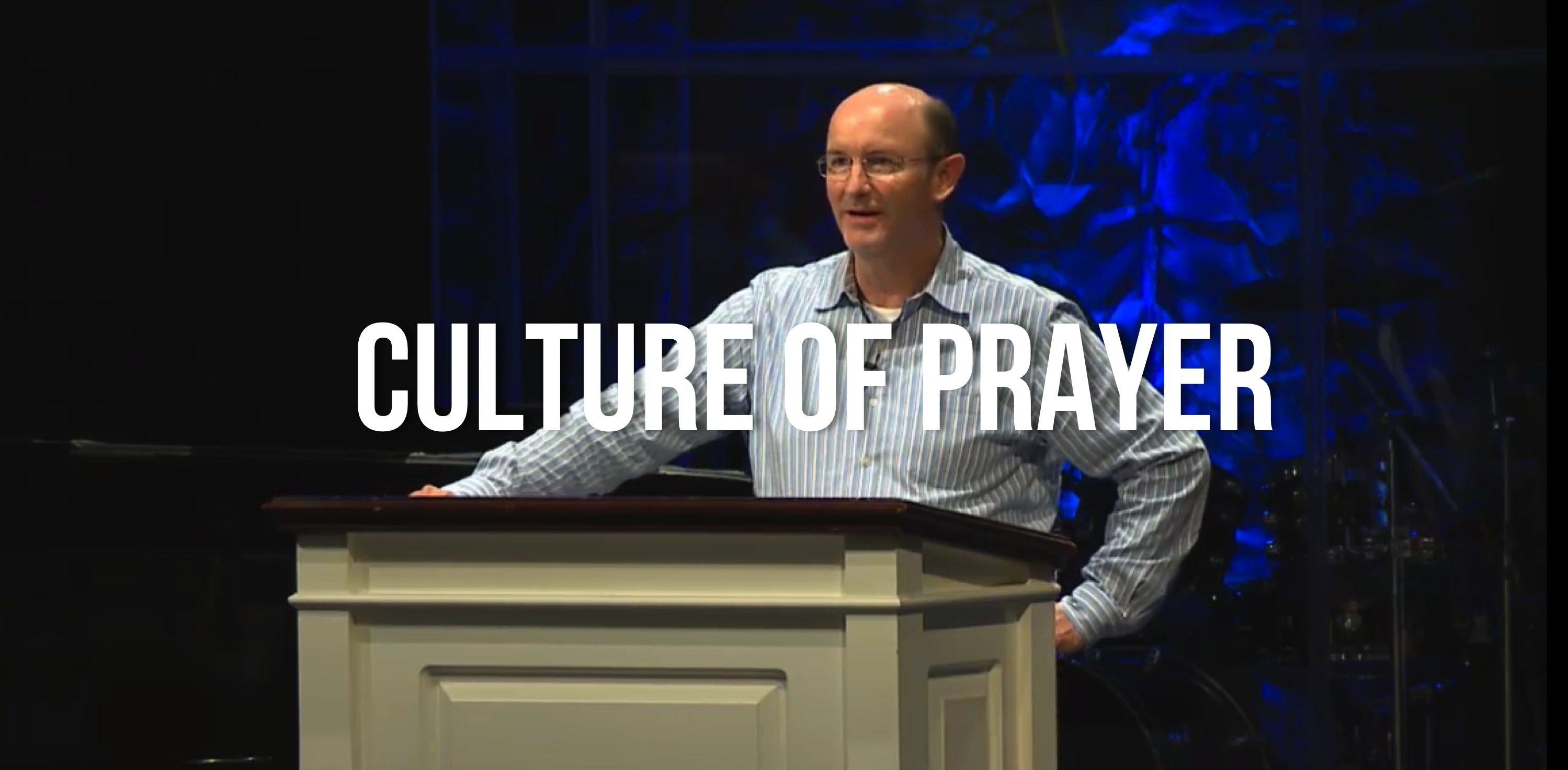
“Seven Vital Truths About a Culture of Prayer” by Daniel Henderson

Culture of Prayer

This past week I attended Basics Conference with leaders from my church. I wanted to share something from that conference that I found particularly helpful.

The following is one of the breakout sessions offered. (I didn’t attend this specific presentation. They rotated the break-out sessions; and I happened to attend it at a different time and location. But the material should be the same.) It’s presented by Daniel Henderson and entitled “Seven Vital Truths About a Culture of Prayer.” I found it very helpful for thinking through practical ways of facilitating times of prayer in church and developing a “culture of prayer” in one’s church.

See video here.

See audio here.