Sharing Our Flesh; Tasting Our Death (Hebrews 2:5-18)
CrossWay Community Church
December 22nd, 2019
Incarnation
The Angels’ Song: Gloria in Excelsis (Luke 2:1-20)

The Great Exchange of the Incarnation (2 Corinthians 8:9)
The following sermon was preached at South City Church on December 17, 2017. In anticipation of Christmas, it explores the theme of Christ’s incarnation, based out of Paul’s words in 2 Corinthians 8:9.
Athanasius’ Biblical Doctrine of the Incarnation
The following sermon was preached at South City Church on January 1, 2017. It is a Christmas sermon exploring the theme of Christ’s incarnation utilizing the work of the Athanasius (296-373).
Redemptive-Historical Survey: 13 | The Gospel–the Mission of Jesus (LDBC Recap 4/24/16)
Explanation
 On Sunday, January 24th, 2016, I began a Core Seminar on Redemptive History & Biblical Theology at my church, Lake Drive Baptist Church. During the course of this series I’ll be sending out emails recapping lessons and directing recipients to resources for further study.
Rather than just share these recaps with my church family, I’ve decided to share them here on the blog for anyone else who might be interested. I will be posting them occasionally over the next couple of months on a weekly basis or so.
See previous posts:
- Introducing Biblical Theology and Redemptive History (LDBC Recap 1/24/16)
- The Significance and Relevance of Biblical Theology and Redemptive History (LDBC Recap 1/31/16)
- Foundational Principles and Basic Frameworks for Redemptive History and Biblical Theology (LDBC Recap 2/7/16)
- Redemptive-Historical, Biblical-Theological Hermeneutics (LDBC Recap 2/14/16 Pt. 1)
- Redemptive-Historical Survey: 1 | Creation (LDBC Recap 2/14/16 Pt. 2)
- Redemptive-Historical Survey: 2 | The Fall (LDBC Recap 2/21/16)
- Redemptive-Historical Survey: 3 | The Flood & Noahic Covenant (LDBC Recap 2/28/16)
- Redemptive-Historical Survey: 4 | Abrahamic Covenant & the Patriarchs (LDBC Recap 3/6/16 Pt. 1)
- Redemptive-Historical Survey: 5 | The Exodus (LDBC Recap 3/6/16 Pt. 2)
- Redemptive-Historical Survey: 6 | The Mosaic Covenant (LDBC Recap 3/13/16)
- Redemptive-Historical Survey: 7 | The Wilderness Wanderings (LDBC Recap 3/20/16, Pt. 1)
- Redemptive-Historical Survey: 8 | Entrance and Life in the Promised Land (LDBC Recap 3/20/16 Pt. 2)
- Redemptive-Historical Survey: 9 | The Monarchy & Davidic Covenant (LDBC Recap 4/3/16 Pt. 1)
- Redemptive-Historical Survey: 10 | Wisdom and Songs (LDBC Recap 4/3/16 Pt. 2)
- Redemptive-Historical Survey: 11 | Exile & New Covenant (LDBC Recap 4/17/16 Pt. 1)
- Redemptive-Historical Survey: 12 | Return from Exile (LDBC Recap 4/17/16 Pt. 2)
Recap/review
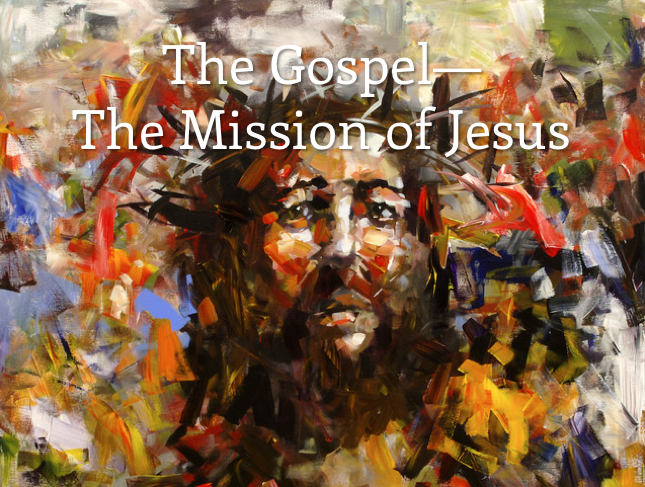
This week was surveyed the role of the Gospel–or, the mission of Jesus–in redemptive history.
Overview of Biblical material
Matthew, Mark, Luke, John – The life and saving work of Jesus.
- God becomes a human—Jesus of Nazareth.
- He works great miracles.
- He teaches great things.
- He is eventually killed by the Jews and Romans.
- But three days later he rises from the dead.
Role within redemptive history
We can summary the central role of the Gospel in redemptive history as follows: God becomes a human being—Jesus—and initially but decisively brings about God’s new-creational kingdom. He does this centrally through his death and resurrection.
As always, we will break this down into in various parts for closer examination.
- God becomes a human: the incarnation’s relationship to the Gospel
First, we want to consider the incarnation’s (lit. “infleshing,” i.e., the event God becoming a human) relationship to the Gospel and its fulfillment of this new-creational kingdom.
 Kirk E. Miller