“Partaking in a Worthy Manner” (Sermon on 1 Corinthians 11:17-34)

Sunday morning sermonLord's Supper - 1 Cor 11
Lake Drive Baptist Church
Delivered August 31st, 2014
 Text: 1 Corinthians 11:17-34


 17 But in giving this instruction, I do not praise you, because you come together not for the better but for the worse. 18 For, in the first place, when you come together as a church, I hear that divisions exist among you; and in part I believe it. 19 For there must also be factions among you, so that those who are approved may become evident among you. 20 Therefore when you meet together, it is not to eat the Lord’s Supper, 21 for in your eating each one takes his own supper first; and one is hungry and another is drunk. 22 What! Do you not have houses in which to eat and drink? Or do you despise the church of God and shame those who have nothing? What shall I say to you? Shall I praise you? In this I will not praise you.

23 For I received from the Lord that which I also delivered to you, that the Lord Jesus in the night in which He was betrayed took bread; 24 and when He had given thanks, He broke it and said, “This is My body, which is for you; do this in remembrance of Me.” 25 In the same way He took the cup also after supper, saying, “This cup is the new covenant in My blood; do this, as often as you drink it, in remembrance of Me.” 26 For as often as you eat this bread and drink the cup, you proclaim the Lord’s death until He comes.

27 Therefore whoever eats the bread or drinks the cup of the Lord in an unworthy manner, shall be guilty of the body and the blood of the Lord. 28 But a man must examine himself, and in so doing he is to eat of the bread and drink of the cup. 29 For he who eats and drinks, eats and drinks judgment to himself if he does not judge the body rightly. 30 For this reason many among you are weak and sick, and a number sleep. 31 But if we judged ourselves rightly, we would not be judged. 32 But when we are judged, we are disciplined by the Lord so that we will not be condemned along with the world.

33 So then, my brethren, when you come together to eat, wait for one another. 34 If anyone is hungry, let him eat at home, so that you will not come together for judgment. The remaining matters I will arrange when I come. (NASB)


Introduction:

Without necessarily consciously thinking about it, we are aware of the idea that the clothing we wear needs to fit the occasion, event, or activity to which we wear them. For example, when I was in high school, I worked at a restaurant. And I had to wear a uniform—this ugly purple polo shirt that felt like burlap. Or, when I refereed soccer, I didn’t just wear anything; I wore a referee outfit. Similarly, many of you probably have either a work uniform, school uniform, or a certain dress code. We even have special gowns for those who are graduating (although I’m slightly convinced that whoever invented these wanted to make graduates feel humiliated—“Hey, you’re graduating. So… wear this black garbage bag and silly hat while we make you walk on a stage”). We have unwritten rules: You don’t wear a tuxedo to go swimming at the beach. When you go to a funeral, you’re not going to dress like Richard Simons. And when you go shopping, you don’t wear your pajamas… unless, apparently, you’re shopping at Wal-Mart.

Continue reading

7 Principles Concerning Israel and the Land (John Piper)

Israel Hamas Conflict

Yesterday Matt Smethurst published a blog post on Israel, Gaza, and the idea of Israel’s ‘divine right’ to the land (originally posted Nov 22, 2012). In it Matt linked to and shared thoughts from one of John Piper’s sermons on that same topic. I was familiar with this sermon; I have listened to it once or twice previously. But I was reminded of it yesterday; and, like Matt, I thought it would be good to share his principles as well as some commentary.

In the sermon, John Piper provides 7 principles concerning Israel, Palestine, the land, ‘divine right,’ etc. I want to share these because 1) this is incredibly relevant right now and 2) I think Piper is spot on here.


1. God chose Israel from all the peoples of the world to be his own possession.

Deuteronomy 7:6 –  The Lord your God has chosen you to be a people for his treasured possession, out of all the peoples who are on the face of the earth.

2. The Land was part of the inheritance he promised to Abraham and his descendants forever.

Genesis 15:18 – On that day the Lord made a covenant with Abram, saying, “To your offspring I give this land, from the river of Egypt to the great river, the river Euphrates.”

Genesis 17:7-8 – “I will establish my covenant between me and you and your offspring after you throughout their generations for an everlasting covenant, to be God to you and to your offspring after you. And I will give to you and to your offspring after you the land of your sojournings, all the land of Canaan, for an everlasting possession, and I will be their God.”

Continue reading

Seminary–You’re doing it wrong

My seminary--Trinity Evangelical Divinity School.

My seminary–Trinity Evangelical Divinity School.

If you’re doing seminary without significant involvement in a local church, as the saying goes, “You’re doing it [sic] wrong.”

Over the past two years of seminary I’ve become more and more convinced of the church’s importance in my (and others’) seminary education. It takes a church to raise a Christian. And equally so, it takes a church to form a seminarian. As such, I am convinced that going through seminary without significant involvement in a local church (i.e., not just attending, but being involved in ministry) is incredibly harmful to one’s seminary experience and formation process.

Let me share with you at least three reasons why.

1. It’s a needed supplement to your seminary education.

We learn a lot of valuable stuff in seminary. But seminary can’t provide us with all the training we need. (Get your Greek out!) It’s a para- (“alongside”) church organization, not a para- “this-is-all-there-is!” organization.

Continue reading

How the Covenantal Nature of the Church Disallows the Prevalent Individualistic, “Contractual” Ecclesiology (Gregg Allison)

The Church is the Church of the New Covenant. It is the New Covenant community. And Gregg Allison [1] rightly perceives that apprehension of this reality destroys the popular individualism in much contemporary church culture.

The dilemma: individualism and “contractual ecclesiology.”

AllisonHe cites Michael Horton who calls this unfortunate phenomena “contractual ecclesiology,” by which Horton means the following:

In evangelical contexts, the church is often regarded chiefly as a resource for fellowship. For the uniquely individualized personal relationship with Jesus, the church is not only dispensable but perhaps also a hindrance to personal growth. … [A] voluntaristic emphasis emerges, with human decision as the contractual basis for … ecclesial [church] existence. [2]

Many view the church as a ‘contractual reality,’ i.e., something that comes into existence  when fellow Christians just so happen to commit to one another (what is seen as an otherwise optional activity). In other words, the church is the product of Christians deciding to form a community. Thus the church’s existence is thought to be based on fellow ‘contractual’ agreement.

Continue reading

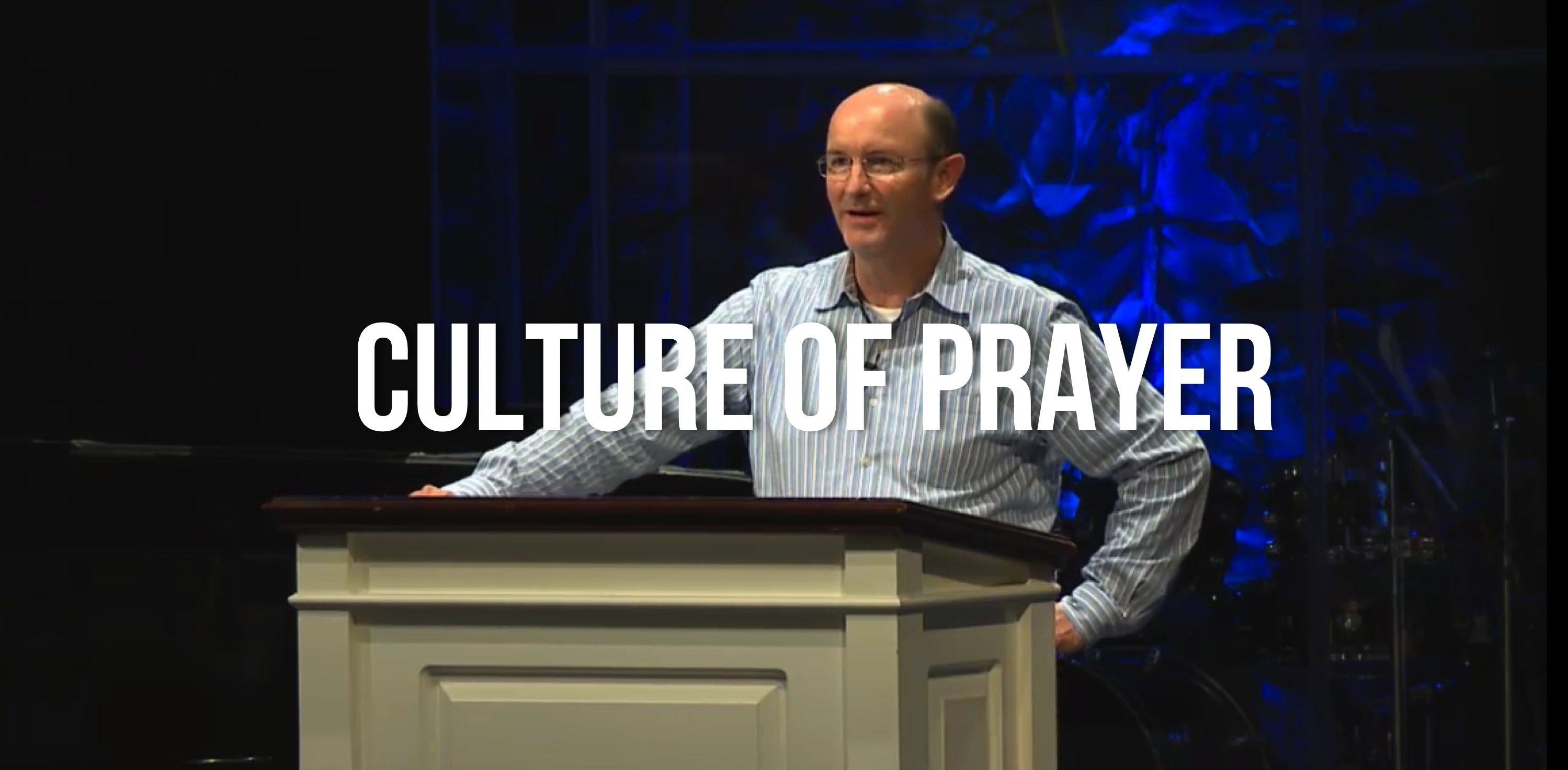
“Seven Vital Truths About a Culture of Prayer” by Daniel Henderson

Culture of Prayer

This past week I attended Basics Conference with leaders from my church. I wanted to share something from that conference that I found particularly helpful.

The following is one of the breakout sessions offered. (I didn’t attend this specific presentation. They rotated the break-out sessions; and I happened to attend it at a different time and location. But the material should be the same.) It’s presented by Daniel Henderson and entitled “Seven Vital Truths About a Culture of Prayer.” I found it very helpful for thinking through practical ways of facilitating times of prayer in church and developing a “culture of prayer” in one’s church.

See video here.

See audio here.