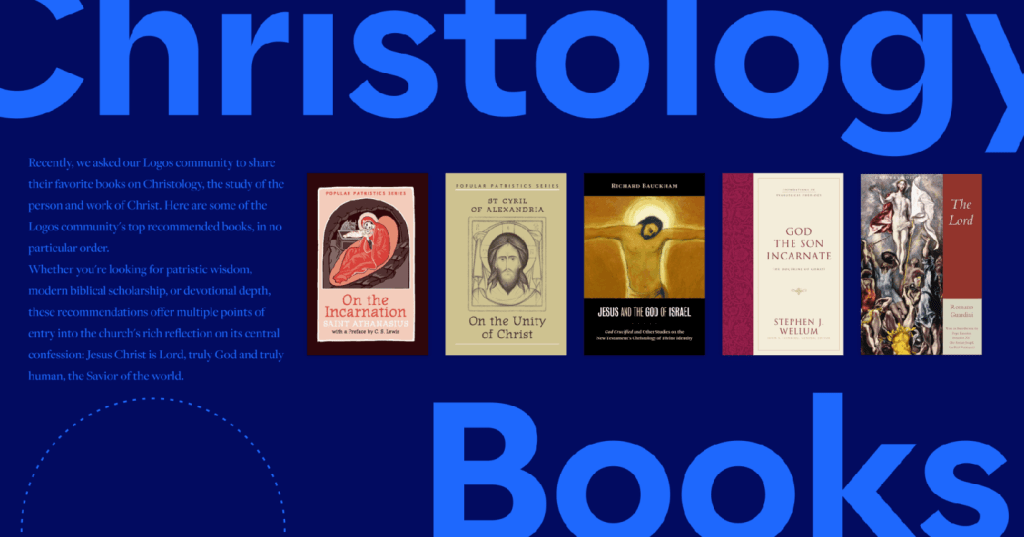
I pooled together some of the top books on Christology as recommended by the Logos community.
I pooled together some of the top books on Christology as recommended by the Logos community.
In this episode of Logos Live, I sat down with Graham Cole to talk about the nature and importance of the incarnation, God the Son become human for us and our salvation.
If Jesus and the Father are one (John 10:30), then how can Jesus say, “The Father is greater than I” (John 14:28)? Does Jesus’ statement contradict the doctrine of the Trinity which affirms Jesus’ co-equality with the Father? Michael Horton joins me on What in the Word? to discuss John 14:28.
Follow the show on YouTube, Spotify, Apple Podcasts, and more.
If Jesus is God, and God knows everything (omniscience), how come Jesus says he does not know the time of his own return? Brandon Crowe joins me on What in the Word? to discuss Mark 13:32 (and its parallel, Matthew 24:36).
Follow the show on YouTube, Spotify, Apple Podcasts, and more.
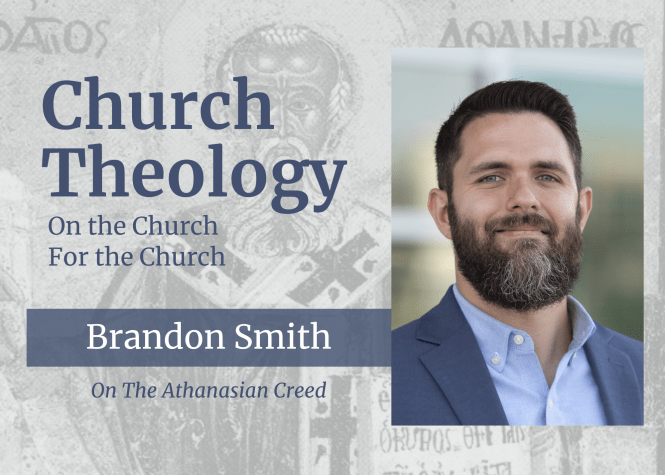
The Athanasian Creed famously confesses, “We worship one God in Trinity, and Trinity in Unity; Neither confounding the Persons nor dividing the substance.” But what exactly does this mean that God is one and yet three persons? And why is The Athanasian Creed so concerned about the doctrine of the Trinity as it relates to our salvation? In this episodes Kirk is joined by Brandon Smith to discuss these questions and more!
(We apologize for the poor quality audio on Kirk’s end. His computer was experiencing a technical problem during the recording which affected the audio.)
Access the episode here. (Available on Apple Podcasts, Spotify, Google Podcasts, Stitcher, and more.)
See all other episodes in this series.
 Kirk E. Miller