What Is God’s Will for My Life?
Southbrook Church
January 28th, 2024
Variations of (or Revisions to) Article XV in The New Hampshire Confession of Faith

What Does it Mean to Be Baptist?: Baptist Distinctives, Origins, Significant Figures, and More

“What comes to mind when you hear the word “Baptist”? I asked this question online, and to no great surprise I received an array of answers. Some think of an energetic church choir with colorful robes. Others think of solemn, even stuffy Sunday services where expressions of emotion are frowned upon. Some think of fiery, revivalistic preaching complete with weekly altar calls. Others think of detailed doctrinal expositions. One friend remarked that, in his experience, when some folks try to describe Baptists, they have an easier time listing things some Baptists don’t believe in (alcohol, dancing) than providing what Baptists do believe!
These responses are all quite understandable. Baptists are a diverse bunch.
So who are Baptists? And what do Baptists actually believe? In this article, we seek to answer theses question, giving the reader a basic primer on the Baptist tradition—with a view to using its resources for one’s study of Scripture.”
Who Can Take the Lord’s Supper?: Understanding Close Communion (with Dallas Vandiver)
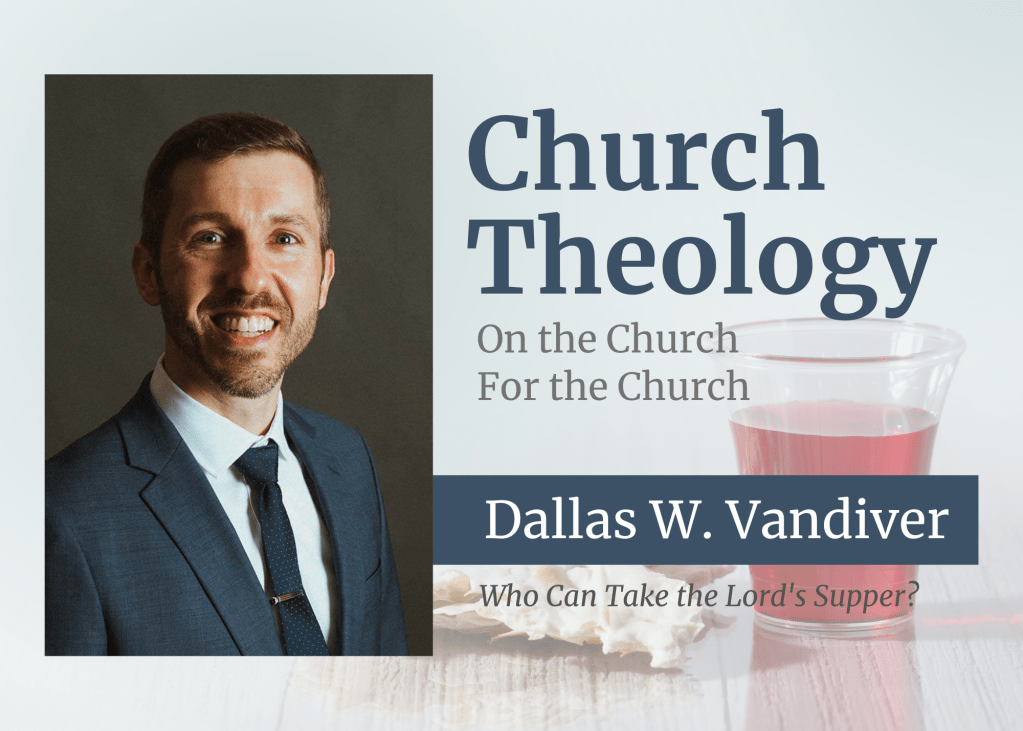
Who ought to be allowed to partake of the Lord’s Supper? Maybe this question has never occurred to you, or you’ve always assumed the answer was obvious! Well, in this episode, Dr. Dallas Vandiver joins me to talk about a historic position known as ‘close communion,’ that the Lord’s Supper ought to be reserved for baptized members in good standing of a gospel-believing church.
Access the episode here. (Available on Apple Podcasts, Spotify, Google Podcasts, Stitcher, and more.)
Dallas Vandiver’s book, Who Can Take the Lord’s Supper?: A Biblical-Theological Argument for Close Communion.
Dallas Vandiver’s shorter article summarizing the arguments of the book:
The Apostles’ Creed (with Michael Svigel)

We’re kicking-off a new series on, what are sometimes called, the ecumenical creeds. In today’s episode, we begin with what is known as The Apostles’ Creed. Along the way, we also answer questions like, what is a creed, and why do the creeds matter? Maybe your church recites The Apostles’ Creed. But what does it mean to call Jesus God’s Son? And what about that line about him descending to hell? We hope you will be encouraged as you dive deeper into this historic articulation of the church’s faith!
Access the episode here. (Available on Apple Podcasts, Spotify, Google Podcasts, Stitcher, and more.)
See all other episodes in this series.
 Kirk E. Miller