“Perhaps the best thing that can come out of the gay marriage decision is for the church to make a final break between our faith and our nation.”
Worldview & Culture
Goodreads Review of Bible, Gender, Sexuality: Reframing the Church’s Debate on Same-Sex Relationships by James Brownson
 Bible, Gender, Sexuality: Reframing the Church’s Debate on Same-Sex Relationships by James V. Brownson
My rating: 3 of 5 stars
If you hold to the traditional, historic Christian position on same-sex relationship (like myself), this is a fantastic book to read in order to engage with the best of the revisionist position. It is well written, structured, and formatted. And his position, although one with which I disagree, is one with which to wrestle. In other words, this is not a “pop” apologetic of the revisionist position. This is a rather scholarly defense. (Don’t read this if you merely want to be able to “straw man” the revisionist view.) I find its position unconvincing and unacceptable; but this position that I hold to be dangerously wrong is nonetheless well presented and argued here. It serves as a fantastic representation of the revisionist position. And it would greatly serve as a catalyst for strengthening and forming a well thought out traditional position on marriage and sexuality. With that said, even though I disagreed with Brownson’s final proposals, I nonetheless learned from him and agreed with much he had to say leading up to those conclusions.
Free-Willers in the Hands of an Angry Guy: Jonathan Edwards’ Philosophy of Human Freedom
The following is a paper originally submitted to Dr. Harold Netland in partial fulfillment of the requirements for the course PR 6411 History of Philosophy of Religion II at Trinity Evangelical Divinity School, Deerfield, IL, April 2015.

Free-Willers in the Hands of an Angry Guy: Jonathan Edwards’ Philosophy of Human Freedom As Primarily Presented in Freedom of the Will
In the preface of his monumental work, A Careful and Strict Inquiry into that Modern Prevailing Notions of that Freedom of Will, Which is Supposed to Be Essential to Moral Agency, Virtue and Vice, Reward and Punishment, Praise and Blame,[1] Jonathan Edwards asserts that knowledge of ourselves, with particular reference to understanding the nature of human freedom, is next to knowledge of God as subjects of chief importance. Upon it rests all matters of religion, virtue, and the doctrines of grace (preface; IV.XIV).[2] Therefore, against the backdrop of the “Modern Prevailing Notion” of human freedom (i.e., libertarianism), Edwards seeks to establish what he sees as a more sure and stable philosophical conception of freedom upon which such things can rest securely. He finds his answer in theological deterministic compatibilism.
This paper seeks to succinctly analyze that philosophy of human freedom as Edwards primarily presents it in his monumental work Freedom of the Will.
RECOMMENDED: America is Becoming Less Christian? Ok, Good (Russell Moore)
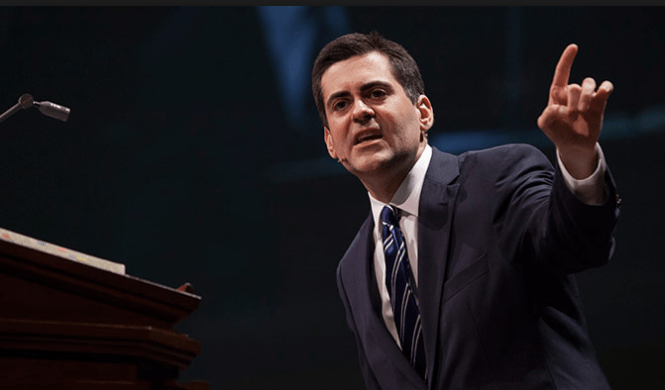
Russell Moore just wrote a piece on the declining number of those in America identifying themselves as Christian.
He responds, “Good!” These tweets sum things up quite well:
.@tonywoodlief Another headline for Pew data: “Large Group of Nonbelievers Gain Self-awareness.”
— Nathan Duffy (@TheIllegit) May 12, 2015
Here are some key statements from his piece:
The number of Americans who identify as Christians has reached an all-time low, and is falling. I think this is perhaps bad news for America, but it is good news for the church.
Christianity isn’t normal anymore, and that’s good news. Only a strange gospel can differentiate itself from the worlds we construct.
The gospel comes to sinners, not to the righteous. It is easier to speak a gospel to the lost than it is to speak a gospel to the kind-of-saved.
We don’t have Mayberry anymore, if we ever did. Good. Mayberry leads to hell just as surely as Gomorrah does.
The future of Christianity is bright. I don’t know that from surveys and polls, but from a word Someone spoke one day back at Caesarea Philippi.
I recommend reading the full article here. It’s very perceptive.
David Luy on Criminal Justice from a Theological Perspective
Check out this video of my academic advisor, David Luy, systematic theology professor at Trinity Evangelical Divinity School (TEDS), addressing the issue of criminal justice from a theological perspective at a meeting for TEDS’ Mosaic Ministry.

