A Mothers’ Day Lament

As we anticipate Mother’s Day this coming Sunday, we are conscious of the ambivalence this day brings for us as a church community.

On the one hand, we rejoice in God’s gift of children to our mothers (and fathers). And we take time to consider the dignity of women and the significance of God-ordained motherhood. This is a time for celebration and thankfulness.

But, on the other hand, as we “mourn with those who mourn” (Rom 12:15), we remain aware of our members for whom this day quite forcefully reminds them — often in silence, secret, and solitude — of their grief, of the desire for motherhood unmet or lost through the experience of infertility, miscarriage, abortion, and a variety of other reasons.

* * * * *

A Mother’s Day Lament:

We recognize on a day like today that everything in God’s creation isn’t as it should be. Sin has broken families and caused deep pain and heartache, and suffering in creation has led to suffering in the flesh—some who long to be parents are unable to experience that joy. Let’s pray together, knowing that God hears us in our pain and sadness:

‘Lord, on this Mother’s Day
we lift up the aching hearts
of all those who long to be mothers,
but mourn the absence of new life within them;
who have conceived,
but suffered loss through miscarriage or abortion;
who have given birth,
but endured the tragedy of burying a child.

Their grief is often hidden from us
or neglected on this day of celebration of motherhood.
We pray that they may experience healing in this church family.

How long, O Lord, must death get its way at the outset of new life?
How long must joy be deferred or interrupted by such cruel sorrow?

Risen Lord of life, grant them comfort and peace,
breathe in us all the breath of new life.
Through Jesus Christ,
who defeated death,
Amen.’
__________
* Written by Nathan Bierma
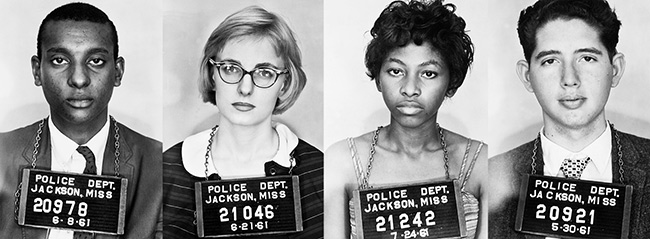
Questions for a Christian Analysis of Civil Disobedience

What is civil disobedience?

Civil disobedience is the intentional breach of legal duty. It is breaking the law. Those who engage in such disobedience lack the legal right to do so, i.e., their behavior is illegal, not legal. However, this sort of disobedience is to be distinguished from mere defiance, rebellion, or criminality. It is disobedience on the grounds of some claimed moral justification or duty.

One expression of civil disobedience is [a] the refusal to comply with and obey a law based on conscience — it is thought that to obey the law is to do evil, thus justifying (or even demanding) disobedience. The perceived evil may be “sin of commission” (being commanded to do wrong) or “sin of omission” (being commanded to refrain from good).

Continue reading

Question: Is Just War Theory Impossible in Practice?

Question: If just war theory acknowledges that not all military action is justifiable or acceptable, then how does this get worked out practically for individual Christians involved in military service.

It would be (at worst) naive and (at best) presumptuous to assume that one’s nation and military will, without exception, engage in actions and ventures that are deemed allowable according to the strict criteria of just war theory. Inevitably, some things (more likely: most all things) will not meet just war theory’s rigorous criteria.

If this is the case, then how can the just warrior participate in military service if it will potentially (likely; assuredly?) mean becoming complicit in unjust military action? Can you conscientiously object to certain actions, missions, wars, and tactics and not others, i.e., only the ones that you deem “just”?

How does this get worked out? Or is just war theory just an ideal, and we admit we are willing to do unjust things, or at least become complicit in them, because “It’s better than the alternative”? (Honest question)

People often point out the perceived practical problems with pacifism; but the difficulties — as far as I see them — seem to be of equal opportunity.

Christian, Stop Sharing Fake News (Recommended Articles)

Fake News

Unintentionally timely. This week my sermon happened to be on truthfulness, honesty, and integrity.

We live in a society and culture in which truthfulness is severely under attack and corroding quickly.

We can look at our political scene — where this word ‘post-truth’ largely originates — where we have this odd paradox between the rise of fact-checkers and yet the reality that very little seem to care about those facts. We live in our social media echo chambers and simply choose to believe whatever we find convenient. We use to say, ‘You are entitled to your own opinion, but not your own facts.’ Now it seems like everyone can have their own facts too. ‘Truth’ is flexible and agenda driven.

~ Sermon (An Integrity that Needs No Oaths, James 5:12), South City Church

As Christians, we must be those who resist such things, not succumb to them. #FakeNews #AlternativeFacts


Recommended:

Facts Are Our Friends: Why Sharing Fake News Makes Us Look Stupid and Harms Our Witness, by Ed Stetzer

‘Alternative Facts’ and Christians as Gullible Skeptics, by Trevin Wax

What’s Wrong with Swearing Oaths? (Matthew 5:33-37; James 5:12)

Why is swearing a roadblock to honesty? What is the problem with swearing oaths (Mt 5:33-37; Js 5:12)?

Oaths divide speech into two camps — honest speech, and less honest speech.

It is not that the oath is in itself wrong, but that it divides speech into two levels. Some statements are sworn to and thus must be true, while others are just normal speech and may not be. … Oaths are dangerous, for they make some speech more honest than other speech. (Peter Davids)

As such, to use an oath (or to swear) is to admit that you are someone who is normally dishonest, someone who can’t be trusted. It is an admission that, outside of using oaths, you are a less than trustworthy person, that your commitment to truth is suspect and needs to be buttressed and strengthened. Oaths are only needed because your speech is unreliable.

Swearing (i.e., oath-taking) is really a pathetic confession of our own dishonesty. Why do we find it necessary to introduce our promises by some tremendous formula? … The only reason is that we know our simple word is not likely to be trusted. (John Stott)

Oaths seems to imply that some speech is more lax and less serious with regards to honesty. The use of oaths implicitly downgrades the expectations for honesty elsewhere. But we are a people who believe that all speech is binding — we are held accountable for the integrity all of our speech, not just sworn speech.

Thus, as people who are called to absolute honesty, swearing and oaths should have no place among Christians. Our commitment to truth should be so consistent and dependable that there is no need for us to buttress our speech with swearing or taking oaths. Our plain speech is good enough. It’s trustworthy as it is.