 On January 28th I posted a youtube video of an excerpt of a sermon by John Piper in which he described the real difference between the Arminian view of atonement (unlimited or universal) and the Calvinistic view of atonement (historically called limited atonement). (Click here to see that post). Yesterday I was reading a book by Mark Dever entitled The Gospel and Personal Evangelism. At one point in the book, Dever makes a statement in passing regarding the the decisiveness of Christ’s atonement which really hits at the crux of this “extent of the atonement” debate. Again, instead of being a debate over universal v. limited extent, the centerpiece of the issue is whether Christ’s death was a potential or effectual atonement.
The apostles clearly learned from Jesus how they were to understand his death on the cross; and to teach Christians about this, the Holy Spirit has inspired various images in the New Testament that convey the reality to us: Jesus as a sacrifice, a redemption, a reconciliation, a legal justification, a military victory, and a propitiation.
 If you were to survey a wide variety of Christians as two which Bible translation they used or which translation they preferred, I am convinced the high majority of the answers you would get would be limited to the King James Version (KJV; also known as the Authorized Version, AV), the New King James Version (NKJV), the NIV (New International Version), the ESV (English Standard Version), the NASB (New American Standard Bible), the New Living Translation (NLT), or even possible the Revised Standard Bible (RSV) or the Holman Christian Standard Bible (HCSB). But one translation that has seemed to slip through the cracks is the American Standard Version (ASV). Interestingly enough, the ASV is actually the basis of three rather well known translations–the RSV (1971), Amplified Bible (1965), and the NASB (1995).
 This is a video of what I am assuming is an excerpt from a sermon by John Piper. In this excerpt Piper explains in very understandable language what is in many senses the essential difference between limited atonement (the Calvinistic view) and unlimited/universal atonement (the Arminian view)–two dominant views on the extent of the atonement. He clarifies what, in my opinion, are rather inappropriate terms (limited, unlimited, universal, etc.).
 Talking about the film “Courageous,” Andy Naselli stated, “some may embrace moralism and feel good about themselves as they try to earn God’s favor by being good dads. This is not the fault of the film but more a comment about how in our depravity we can be very, very bad by being very, very “good.” We can make an idol out of just about anything—even family.”[
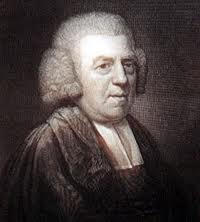 I ran across this hymn a few weeks ago, although I have been acquainted with it before. I decided it was definitely worth sharing. This hymn is certainly not as popular as John Newton’s famous hymn, “Amazing Grace,” but I certainly recommend reading through the words and meditating on their truth. From a man who understood grace extremely well in light of who he was as a depraved, wicked, detestable man in need of saving, “In Evil Long I Took Delight”:
 Kirk E. Miller