RECOMMENDED: Christianity and Liberalism by J. Gresham Machen (FREE)

I recently tweeted,

Rajkumar Luke responded,

What a great find! So I thought I’d share.

Get this FREE public domain, PDF copy of Gresham Machen’s classic and increasingly relevant work, Christianity and Liberalism.

Free-Willers in the Hands of an Angry Guy: Jonathan Edwards’ Philosophy of Human Freedom

The following is a paper originally submitted to Dr. Harold Netland in partial fulfillment of the requirements for the course PR 6411 History of Philosophy of Religion II at Trinity Evangelical Divinity School, Deerfield, IL, April 2015.


Free-Willers in the Hands of an Angry Guy: Jonathan Edwards’ Philosophy of Human Freedom As Primarily Presented in Freedom of the Will


In the preface of his monumental work, A Careful and Strict Inquiry into that Modern Prevailing Notions of that Freedom of Will, Which is Supposed to Be Essential to Moral Agency, Virtue and Vice, Reward and Punishment, Praise and Blame,[1] Jonathan Edwards asserts that knowledge of ourselves, with particular reference to understanding the nature of human freedom, is next to knowledge of God as subjects of chief importance. Upon it rests all matters of religion, virtue, and the doctrines of grace (preface; IV.XIV).[2] Therefore, against the backdrop of the “Modern Prevailing Notion” of human freedom (i.e., libertarianism), Edwards seeks to establish what he sees as a more sure and stable philosophical conception of freedom upon which such things can rest securely. He finds his answer in theological deterministic compatibilism.

This paper seeks to succinctly analyze that philosophy of human freedom as Edwards primarily presents it in his monumental work Freedom of the Will.

Continue reading

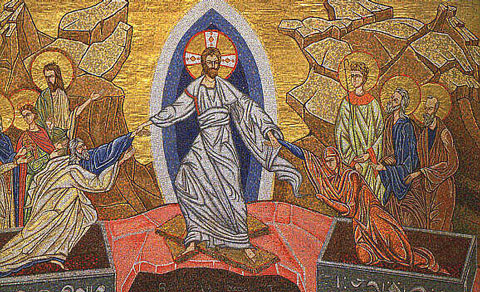
The Significance of Christ’s Resurrection: Scriptural Mediations for Resurrection Sunday

The following is the section on Christ’s resurrection from my personal statement of faith.

If you’d like, use the following, with its footnotes of scriptural references, to work your way  through relevant texts and mediate on the meaning and significance of Christ’s resurrection.

Christ’s bodily resurrection serves as the decisive validation of his ministry and claims.[1] God’s resurrection of Jesus[2] demonstrates that Christ’s sin-vanquishing (and thereby death-defeating) death was indeed effective[3] and vindicates him as God’s appointed Messiah.[4] In fact, it is regarded as his Messianic enthronement.[5] His appointment as judge is confirmed by his resurrection.[6] Because he lives indestructibly, he is permanently able to make intersession for those for whom he died.[7] Through his resurrection he triumphed over demonic forces.[8] Christ embodies the hope of resurrection.[9] In his resurrection, he annihilated death and obtained incorruptibility.[10] As such, in him the eschatological order of resurrection,[11] new creation,[12] new humanity,[13] and Spirit-empowered[14] existence has dawned. His personal resurrection inaugurates the general resurrection.[15] It functions representatively for all those united to him.[16] In him believers are already raised spiritually[17] and will eventually be raised bodily[18]—one holistic resurrection occurring in two installments.

See also my past series presenting a Biblical theology of resurrection.

Continue reading

A Summary of Jonathan Edwards’ View of Human Freedom

The following outline is essentially a summary of part 1 of Jonathan Edward’s Freedom of the Will.[1] The following does not include Edward’s defense of his view or critique of others’ views. That material is to be found in parts 2-4.


  • Freedom – “Freedom and Liberty … is The power, opportunity, or advantage, that any one has, to do as he pleases. Or in other words, his being free from hinderance or impediment in the way of doing, or conducting in any respect, as he wills.” (1.5)
    • Note: How a person comes to such volitions is not determinative for whether freedom is truly present. One is free when one chooses as one pleases, regardless of the cause of such choices.
    • Freedom contrasts with compulsion and restraint:
      • Compulsion – “a person’s being necessitated to do a thing contrary to his will.” (1.5)
      • Restraint – “being hindered, and not having power to do according to his will.” (1.5)
    • The will – “That power, or principle of mind, by which it is capable of choosing: an act of the Will is the same as an act of choosing or choice” (1.1).
      • Note: The will is not a property of the will (contra. the notion of a self-determining will [i.e., a self-willing will]), but a property of the person. Thus, an act of will is a person, not the will, in the act of choosing. // This distinction will be important as we consider what determines the will—as Edwards will answer, the motives of the person not a will as an undetermined, free entity.
  • Determination of the will.
    • Definition – “Causing that the act of the Will or choice should be thus, and not otherwise.” (1.2)
    • What determines the will.
      • The act of the will is an effect that has a cause. And, therefore, this cause is what determines the will.
      • And that cause is what Edwards calls motive. “It is that motive, which, as it stands in the view of the mind, is the strongest, that determines the Will.” (1.2)
    • Motive – “The whole of that which moves, excites, or invites the mind to volition, whether that be one thing singly, or many things conjunctly. … And when I speak of the strongest motive, I have respect to the strength of the whole that operates to induce a particular act of volition, whether that be the strength of one thing alone, or of many together.”
    • Conclusion – “The will always is as the greatest apparent good is” [i.e., what the mind at that moment apprehends as most agreeable]. (1.2.) A man’s choices are made “according to what, in the present view of his mind, taken in the whole of it, is most agreeable to him.” (1.2) Therefore, by definition, “A man never, in any instance, wills any thing contrary to his desires, or desires any thing contrary to his Will.” (1.1). In short, the will is always determined by the greatest desire.
  • Necessity – “A thing is then saidto be necessary, when itmust be, and cannot be otherwise.” (1.3)
    • Distinction between philosophical and common use of necessity – The philosophical or metaphysical definition of necessity isto be distinguished from the common use of necessity which has a relative meaning, i.e., it implies compulsion from opposing external forces.
      • Common use – “Implies something that frustrates endeavour or desire.” (1.3)
      • Philosophical use – Simply means certainty.
      • Point – “Necessity [i.e., the philosophical kind] is not inconsistent with liberty.” (1.3)
    • Distinction between natural and moral necessity (and inability).
      • Natural necessity (and inability) – “Such Necessity as men are under through the force of natural causes.” (1.4) “We are saidto be naturally unable to do a thing, when we cannot do it if we will, because what is most commonly called nature does not allow of it, or because of some impeding defect or obstacle that is extrinsic to the Will; either in the faculty of understanding, constitution of body, or external objects.” (1.4)
        • Illustration: A man stepping off a ledge is unable to keep himself from falling do to the law of gravity.
        • Note: This may involve a restriction on freedom, for it involves compulsion from external forces that may contradict one’s desire.
      • Moral necessity (and inability) – “That Necessity of connexion andconsequence, which arises from such moral causes, as the strength of inclination, or motives, and the connexion whichthere is in many cases between these and such certain volitions and actions.” (1.4) “Moral Inability consists …is the want of inclination; or the strength of a contrary inclination; orthe want of sufficient motives in view, to induce and excite the act of the Will, or the strength of apparent motives to the contrary. Or both thesemay be resolved into one; and itmay be said in one word, that moral Inability consists in the opposition or want of inclination.” (1.4)
        • Illustration: A sinful man who, due to his sinful desires, is unable to repent because he does not desire to repent.
        • Note: This does not involve a restriction on freedom, for it involves no compulsion but is a necessity related to one’s own desire. “No such opposition, or contrary will and endeavour, is supposable in the case of moral Necessity; which is a certainty of the inclination and will itself; which does not admit of the supposition of a will to oppose and resist it.” (1.4)
        • Caveat – As such, ‘moral inability’ is an misleading term. “Man cannot be truly said to be unable to do a thing, when he can do it if he will. It is improperly said, that a person cannot perform those external actions, which are dependent on the act of the Will, and which would be easily performed, if the act of the Will were present. … Therefore, in these things, to ascribe a non-performance to the want of power or ability, is not just; because the thing wanting is not a being able, but a being willing.” (1.4)

[1] All quotations are from part 1 of Jonathan Edwards, The Works of Jonathan Edwards (vol. 1; Bellingham, WA: Logos Bible Software, 2008).