You may have read my previous post entitled, Are “Authorial Intent” and “Christ-Centered” Mutually Exclusive? (if not, you may want to do so before continuing, although it’s not necessary).
But this post prompts the question, if we are to preach Christ in all of Scripture (that is, preach Christotelically; see my previous post Christ in the Old Testament: Christocentric or Christotelic Hermeneutic?), are we allegorizing? If Christ is not at all present in a text, then are we spiritualizing the text by preaching Christ?
I have had enough experience with a certain school of interpretation to realize that many people answer this question in the affirmative–unfortunately. It has appeared to me, however, that part of their reason for doing so was a fundamental misunderstanding, a confusion of typology and allegory.[1] So, let me try to spell out some of the basic, introductory differences between typology and allegory.
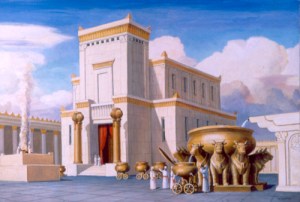 In verses 1 Corinthians 3:16-17, 6:19, and 2 Corinthians 6:16 Paul uses the Old Testament temple as a metaphor for believers. What this metaphor conveys is the comparison of our New Testament worship to that of the Old Testament. The Levitical law required sacrifices. However, now our worship demands a living sacrifice (Romans 12:1), a sacrifice of our lives. The Old Testament worship was centered on locality and the temple building. However, now worship is in spirit and in truth and no longer based on such externals such as location and buildings (John 4:20-24). And finally, just as the Shekinah glory dwelt within the temple, now the same presence of God, the Holy Spirit, dwells within us (1 Corinthians 6:19). And just as the Shekinah glory was the visible presence of God at the temple or tabernacle, so the presence of God should be visible in our lives (i.e., “the fruit of the Spirit,” Gal 5:22-23).
