In Onward, Russell Moore provides a manifesto for Christian cultural engagement in a post-Christian society. As Christians, Moore calls us to embrace the “strangeness” of Christianity and to see an opportunity for Christian mission precisely in a society where a Christian veneer of nominalism is now out of style.
Ministry
An Unbusy Pastor | Eugene Peterson
From The Pastor: A Memoir by Eugene Peterson. Excerpt originally published at YouthWorker.com.
‘As a congregation, we had achieved critical mass, we were self-supporting financially, we had built a sanctuary that gave visibility to our worshipping presence in the neighborhood. It was the beginning of what I earlier called the badlands era in which the euphoria of establishing a church had gone flat,the adrenaline of being involved in a challenging enterprise had drained out. I had worked hard for those three years. The congregation had worked hard. We couldn’t sustain it.
Except that I tried. I formed committees. I made home visits. Longer hours. A longer workweek. Just a few years previous to this, Roger Bannister, the first 4-minute miler, wrote his autobiography in which he described life following his high-profile athletic celebrity. He wasn’t breaking records anymore.He compensated by working harder and harder. He described himself as a carpenter who “made up for his lack of skill by using a lot of nails.” That was me. I had tried to slow down. I had tried to relax, but I was afraid of failing. I couldn’t help myself.
One evening after supper, Karen—she was 5years old at the time—asked me to read her a story. I said, “I’m sorry, Karen, but I have a meeting tonight.” “This is the 27th night in a row you have had a meeting.” She had been keeping track, counting.
The meeting I had to go to was with the church’s elders, the ruling body of the congregation. In the 7-minute walk to the church on the way to the meeting I made a decision. If succeeding as a pastor meant failing as a parent, I was already a failed pastor. I would resign that very night.
Continue readingWhat Is the Baptism of the Holy Spirit?

“The baptism of the Holy Spirit has been a subject of debate and much discussion among Christians over the years. What exactly does it mean to be baptized in the Spirit? Is it a distinct event that occurs after conversion, as some maintain, or an integral part of salvation universally experienced by all believers? And what is its significance redemptive-historically, particularly as it finds expression at Pentecost (Acts 2)?
In this article, we’ll seek to answer the question, ‘What is the baptism of the Holy Spirit?’ by examining the biblical evidence, analyzing various interpretations, and attending to its theological significance.”
The Reformed Pastor by Richard Baxter, Updated and Abridged by Tim Cooper
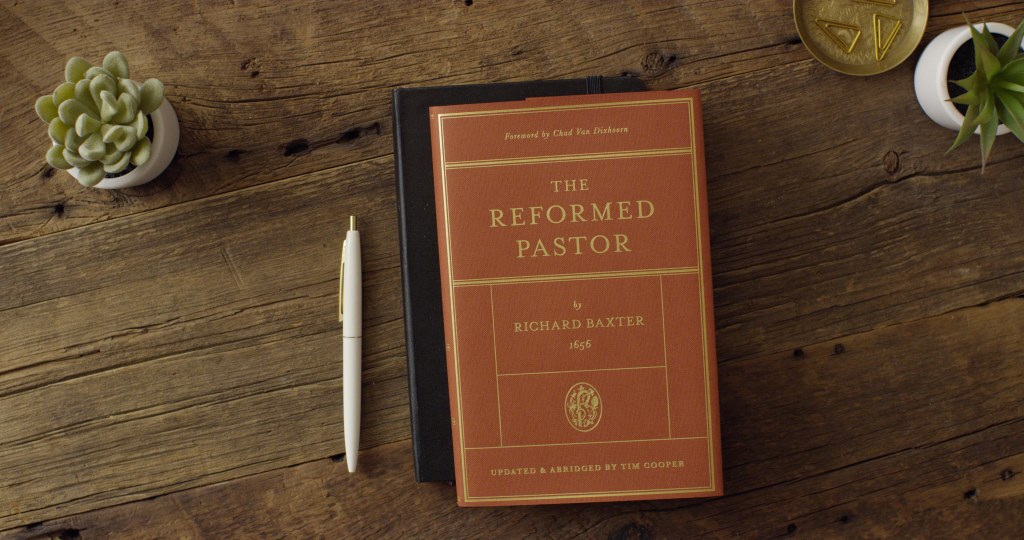
Tim Cooper, professor of church history at the University of Otago in New Zealand, has done us a great service by updating and abridging Richard Baxter’s classic pastoral text, The Reformed Pastor.
Originally published in 1656, The Reformed Pastor is Baxter’s exposition of Acts 20:28 (“Take heed unto yourselves and all the flock, over which the Holy Spirit has made you overseers, to feed the church of God, which he has purchased with his own blood”). Baxter delivered these words to his fellow local pastors as they renewed their commitment to a “reformed” pastoral ministry (i.e., one that was re-formed to the original shape of the New Testament). Baxter reminds his fellow pastors of the seriousness of their calling, invites them to confess their neglect, and calls for a new resolve to their work, with a particular emphasis on the ministry of home visitation.
Whether or not one will agree with all the particulars of Baxter’s application of Acts 20, namely the specific form he says home visitations ought to take, his voice continues to serve a clarion call to the essential work of pastoral ministry: take heed of the flock. The message of The Reformed Pastor seems needful all the more as much of modern American evangelicalism seems to clamor for the opposite—”big box” megachurches where most pastors and congregants often remain relatively unknown to each other, churches that pursue production value, programs, and metrics over actual disciple-making, and thus pastors who are expected to be more like corporate CEOs than true shepherds.
“In the history of pastoral life, certain books stand out as classics that must be read by anyone who is serious about this utterly vital sphere of the Christian world. … Among this select group is Richard Baxter’s The Reformed Pastor. It can be a daunting read, for Baxter demands much of anyone who would seek to serve as a pastor to the souls of men and women and children. Daunting though it is, it is a must-read. For here we find not only a book that has influenced generations since it was first published but a work that sets forth the high calling of being a minister of the gospel. The latter is not in vogue today for a number of reasons, and to some extent we are reaping the fruit of our failure to highly prize pastoral leadership. May the reading of this new edition, rightly abridged, serve to rekindle among God’s people a prizing of the pastorate and a prayer for those who serve in it. May it be a key vehicle to help refocus the passions and goals and energies of those currently serving as shepherds of God’s people!”
Michael A. G. Haykin
Tim Cooper has sought to make this classic text a great deal easier to read by updating much of Baxter’s seventeenth-century language. Also, by eliminating Baxter’s redundancies, he’s reduced the book’s length to 30,000 words, down from its original 160,000, presenting the best of Richard Baxter’s timeless advice, while making it all the more accessible to a new generation of pastors.
Table of Contents
Foreword by Chad Van Dixhoorn
Introduction
Chapter 1: Take Heed unto Yourselves
Chapter 2: Take Heed unto All the Flock
Chapter 3: The Ministerial Work
Chapter 4: What a Subtle Enemy Is This Sin of Pride!
Chapter 5: Many Things Sadly out of Order
Chapter 6: Reasons Why You Should Take Heed unto All the Flock
Chapter 7: The Greatest Benefits of Our Work
Chapter 8: Many Difficulties We Will Find
Chapter 9: Some May Object
Chapter 10: The Best Directions I Can Give
Appendix 1: The Catechism
Appendix 2: Book Outline
Note: I received a free copy of this book from the publisher in exchange for this honest review.
How to Preach the 10 Commandments

The Ten Commandments have a prominent place in Christianity. But how should we go about interpreting, applying, and even teaching them? In this article, Kirk offers eight factors we should consider.
 Kirk E. Miller