Seminary–You’re doing it wrong

My seminary--Trinity Evangelical Divinity School.

My seminary–Trinity Evangelical Divinity School.

If you’re doing seminary without significant involvement in a local church, as the saying goes, “You’re doing it [sic] wrong.”

Over the past two years of seminary I’ve become more and more convinced of the church’s importance in my (and others’) seminary education. It takes a church to raise a Christian. And equally so, it takes a church to form a seminarian. As such, I am convinced that going through seminary without significant involvement in a local church (i.e., not just attending, but being involved in ministry) is incredibly harmful to one’s seminary experience and formation process.

Let me share with you at least three reasons why.

1. It’s a needed supplement to your seminary education.

We learn a lot of valuable stuff in seminary. But seminary can’t provide us with all the training we need. (Get your Greek out!) It’s a para- (“alongside”) church organization, not a para- “this-is-all-there-is!” organization.

Continue reading

J. Gresham Machen’s “Christianity and Liberalism”–Continued Relevance for a Continued Liberalism

As contemporary Christian continues its debate over homosexuality and (so-called) same sex marriage, my mind keeps drifting back to one of my favorite books of all time, Christianity and Liberalism (originally published in 1923) by J. Gresham Machen, one of my favorite authors of all time. (See my review of this book here.) This ‘Christian’ position in support of same-sex marriage as Christian is merely one manifestation of an ever present liberalism to which Machen’s words are as relevant as the day he originally wrote them.

If you haven’t yet read this book, please do yourself a favor and do so immediately. But in the meantime, allow me to share with you some snippets that I think exemplify this current relevance.


Machen


On standing for and proclaiming the truth.

The type of religion which … shrinks from “controversial” matters, will never stand amid the shocks of life. In the sphere of religion, as in other spheres, the things which men are agreed are apt to be the things that are least worth holding; the really important things are the things about which men will fight. (1-2)

The things that are sometimes thought to be hardest to defend are also the things that are most worth defending. (8)

Continue reading

How the Covenantal Nature of the Church Disallows the Prevalent Individualistic, “Contractual” Ecclesiology (Gregg Allison)

The Church is the Church of the New Covenant. It is the New Covenant community. And Gregg Allison [1] rightly perceives that apprehension of this reality destroys the popular individualism in much contemporary church culture.

The dilemma: individualism and “contractual ecclesiology.”

AllisonHe cites Michael Horton who calls this unfortunate phenomena “contractual ecclesiology,” by which Horton means the following:

In evangelical contexts, the church is often regarded chiefly as a resource for fellowship. For the uniquely individualized personal relationship with Jesus, the church is not only dispensable but perhaps also a hindrance to personal growth. … [A] voluntaristic emphasis emerges, with human decision as the contractual basis for … ecclesial [church] existence. [2]

Many view the church as a ‘contractual reality,’ i.e., something that comes into existence  when fellow Christians just so happen to commit to one another (what is seen as an otherwise optional activity). In other words, the church is the product of Christians deciding to form a community. Thus the church’s existence is thought to be based on fellow ‘contractual’ agreement.

Continue reading

“Seven Vital Truths About a Culture of Prayer” by Daniel Henderson

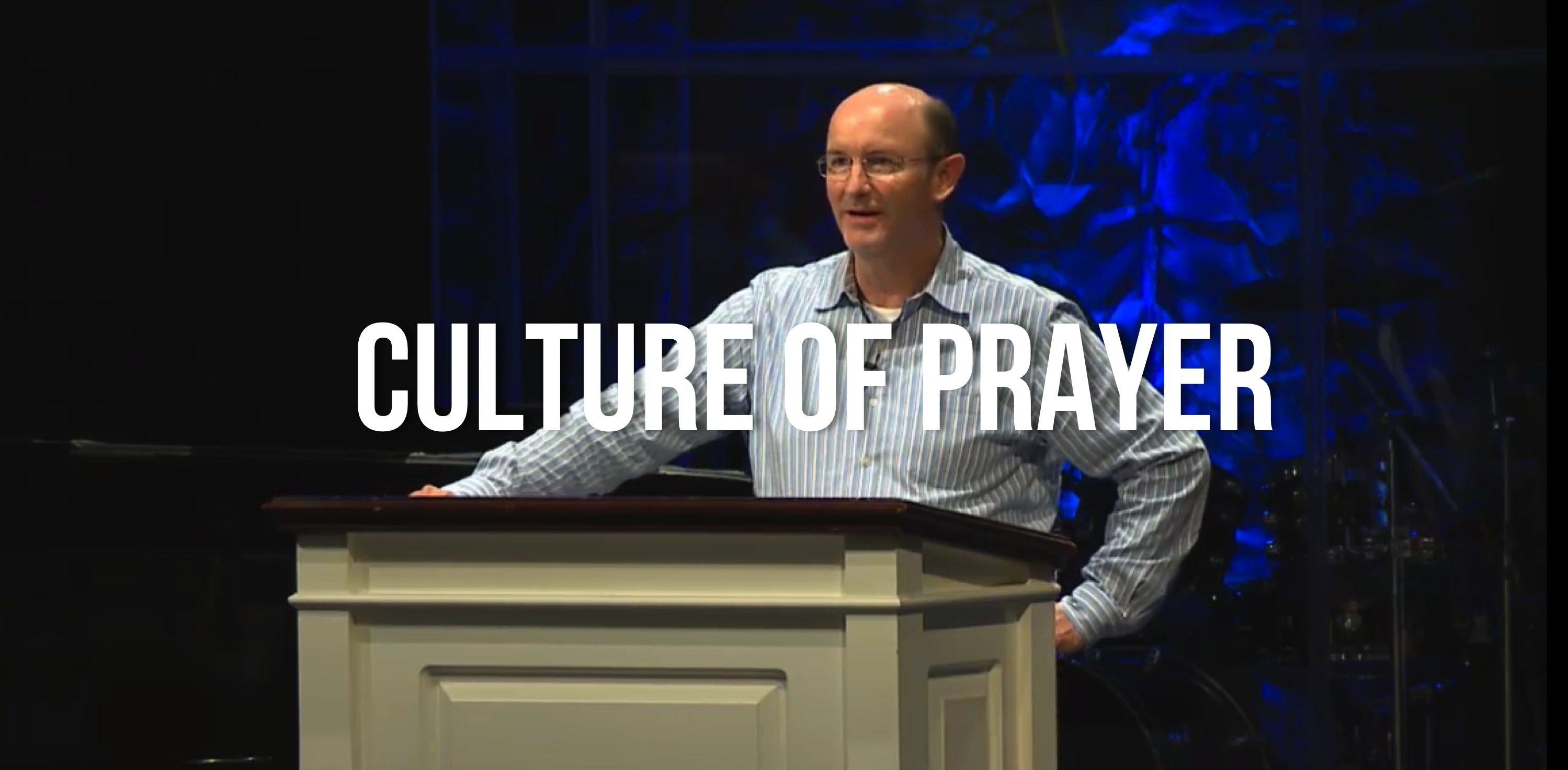
Culture of Prayer

This past week I attended Basics Conference with leaders from my church. I wanted to share something from that conference that I found particularly helpful.

The following is one of the breakout sessions offered. (I didn’t attend this specific presentation. They rotated the break-out sessions; and I happened to attend it at a different time and location. But the material should be the same.) It’s presented by Daniel Henderson and entitled “Seven Vital Truths About a Culture of Prayer.” I found it very helpful for thinking through practical ways of facilitating times of prayer in church and developing a “culture of prayer” in one’s church.

See video here.

See audio here.

“What Can Miserable Christians Sing?” (Carl Trueman)

In Carl R. Trueman’s book The Wages of Spin: Critical Writings on Historical and Contemporary Evangelicalism, he included a chapter entitled,”What Can Miserable Christians Sing?”

The answer to that question, Trueman answers, is the Psalms and specifically the Psalm’s model of lamentation.

Of this short chapter Trueman states,

This little piece which took minimal time and energy to author has garnered more positive responses and more touching correspondence than anything else I have ever written. It resonated with people across the Christian spectrum, people from all different church backgrounds who had one thing in common: the understanding that life has a sad, melancholy, painful dimension which is too often ignored and sometimes even denied in our churches.

He describes his purpose for writing as

to highlight what I saw as a major deficiency in Christian worship, a deficiency that is evident in both traditional and contemporary approaches: the absence of the language of lament. The Psalms, the Bible’s own hymnbook, contains many notes of lamentation, reflecting the nature of the believer’s life in a fallen world. And yet these cries of pain are on the whole absent from hymns and praise songs.

CarlTruemanHe sums up the thrust of that chapter as follows:

There is nothing in the typical book of hymns or praise songs that a woman who has miscarried a baby, or a parent who has just lost a child to cancer, can sing with honesty and integrity on a Sunday.

The desperation and heartache of such moments are things which we instinctively feel have no place in a religion where we are called on to rejoice in the Lord always. Yet there is a praise book which taps such emotions and gives the broken-hearted honest words with which to express their deepest sorrows to God.

It’s called the book of Psalms; and its recovery as a source of public praise in the Christian church can only help the church overcome its innate triumphalism and make room for the poor and the weak.

In short, he says, in the Psalms “one finds divinely inspired words which allow the believer to express their deepest pains and sorrows to God.”

Continue reading