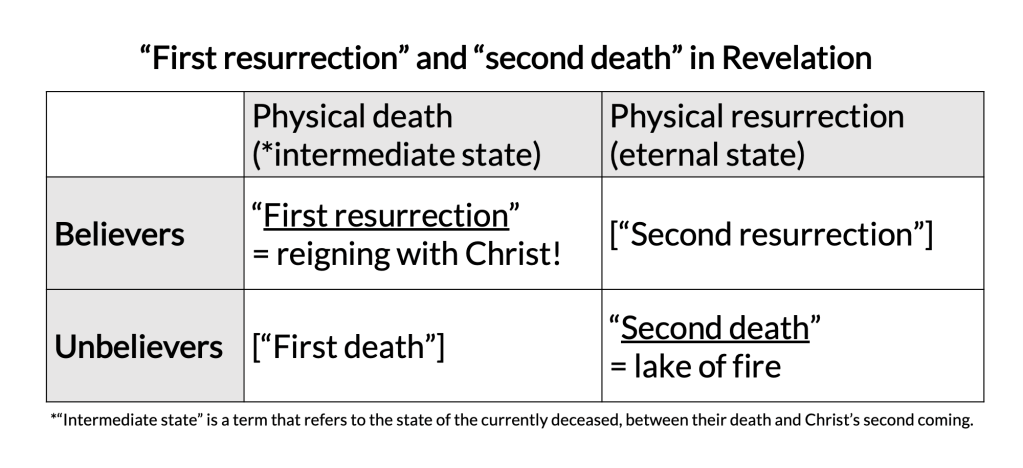
In this episode, Dan has Kirk walk us through Revelation 20:11-20:8, the visions of the Great White Throne judgment and the introduction of the new creation.
In this series of three episodes, we address the matter of the 1,000-year reign, also known as the millennium, as expressly mentioned in Revelation 20. In so doing, we offer a more detailed case for the interpretation known most popularly as amillennialism.
Pt. 1: The Four Views on the Millennium
In the first episode, we overview the four main positions as it relates to the millennium: (1) dispensational premillennialism, (2) historic (or classic) premillennialism, (3) postmillennialism, and (4) amillennialism.
Finally, in this third episode, we consider other New Testament arguments against a literal, futurist, premillennialist position and in favor of a symbolic, “church-age” interpretation of the millennium.
In this episode, Kirk and Dan walk us through the three scenes of Revelation 19:11-21. This passage zooms in on the return of Christ at his second coming to judge and destroy the two beasts and those who align with them.
In Revelation 17:1-18, we saw a vision of Babylon, or the Great Prostitute’s, judgment. In this episode, Kirk and Dan continue with part 2 of that judgment in Revelation 18:1-19:10. Whereas in chapter 17, the Harlot’s judgment was depicted in visionary form, now in 18:1-19:10 we hear a chorus of songs — both lament and praise — in response to Babylon’s fall.
In this episode, Kirk and Dan walk through the vision of Revelation 17:1-18, depicting the Great Prostitute, or Babylon, who rides on the beast with its seven heads (kings) and ten horns (kings).

 Kirk E. Miller