The following belongs to a series on the continuation or cessation of the miraculous phenomena of tongues-speaking. Read the previous post here.
__________
“Reinventing the wheel” has never been an efficient venture. Contemporary theology owes much to the theological progress made before it. Although it certainly does not have the final word in the matter, what historical theology can contribute to this study on tongues must be considered, as demanded by wisdom and caution.
If continuationism is true, one would expect to find evidences of tongues in those centuries closest to the apostolic era. However, as D.A. Carson notes, from the beginning of the 2nd century until the Montanists emerged, claims of tongues-speaking were tremendously rare.1 Eusebius of Caesaria (AD 263-339) gave report of this 2nd century sect (the Montanists) which practiced babbling speech. His report reveals that this group was divisive, declared heretical, and expelled from the Church.2
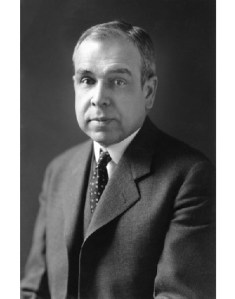 This is a paper I wrote my Junior year, spring semester of 2011, at Maranatha Baptist Bible College for a class entitled “Fundamentalism.” This is a narrowly focused biography of one of my heroes, J. Gresham Machen, specifically on how his actions made him a leader in the separatist movements during his day.
 Kirk E. Miller