Originally published in 1947, The Uneasy Conscience of Modern Fundamentalism provided a manifesto for evangelical Christians who are serious about bringing their Christian faith to bear in contemporary culture. In this classic book, Carl F. H. Henry, the father of the modern evangelical movement, pioneered a path forward that avoids, on the one hand, the error of disengagement and apathy towards today’s social ills, and, on the other hand, the error that is the social gospel. In our current cultural climate, in which evangelicalism is still wrestling with how to engage social matters, this book is as relevant as ever.
Month: January 2022
Why the Church Remains Essential (with Jonathan Leeman)
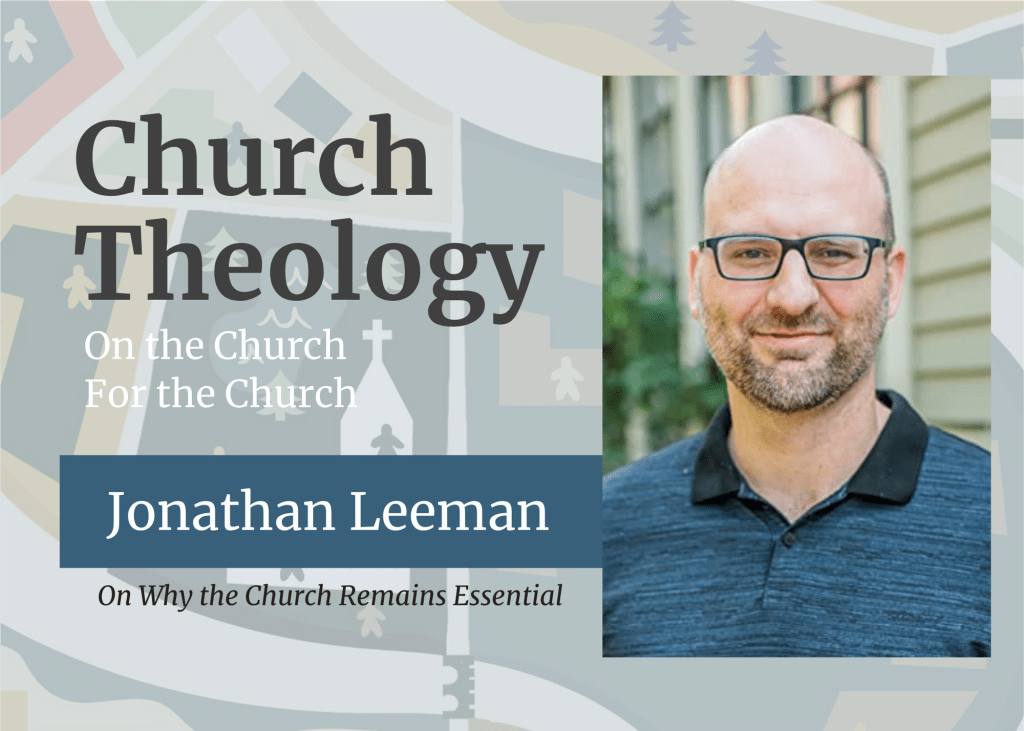
Over the last couple of years, churches have been hit with COVID restrictions, tensions over race, political disagreements, church abuse scandals, and more. This wave has resulted in many a Christian asking, “Is church worth it?” Or as more and more churches adopt things like “online campuses,” many are tempted to treat staying home as a permanent, on-par option with the physical gathering. But how would the Bible help us to consider these things? Is the gathered church still essential? Jonathan Leeman joins Kirk in this episode to begin answering these questions, and to discuss the topic of his recent book, co-authored with Collin Hansen, Rediscover Church: Why the Body of Christ is Essential.
Access the episode here. (Available on Apple Podcasts, Spotify, Google Podcasts, Stitcher, and more.)
Understanding the Debate & Differences in How We Put Our Bibles Together (Views on Covenantal & Dispensational Theologies with Brent Parker and Richard Lucas, Ep. 2)

In this episode, I continue my conversation with Brent E. Parker and Richard Lucas, editors of the forthcoming book, Covenantal and Dispensational Theologies: Four Views on the Continuity of Scripture (IVP, February 2022). In this session, we talk about what different commitments or perspectives ultimately underlie the various views, why all of this matters, how it comes to bear in our theology and practice, and how we might construct a path forward in the doing of Biblical theology for the local church.
Their book is currently available for pre-order, releasing February 8, 2022.
Access the episode here. (Available on Apple Podcasts, Spotify, Google Podcasts, Stitcher, and more.)
See all other content in this series.
Church Membership: Publicly Belonging to Christ’s People
Church Membership: Publicly Belonging to Christ’s People
CrossWay Community Church
January 23rd, 2022
See all other content in this series.
A Survey of How Different Systems of Theology Put the Bible Together (Views on Covenantal & Dispensational Theologies with Brent Parker and Richard Lucas, Ep. 1)
How should we interpret the promises made to the people of Israel in the OT — are they being fulfilled in the church? Does God have a distinct plan for the nation of Israel separate from the church? How do Christians relate to the Mosaic Law? What does infant baptism have to do with our understanding of the Biblical Covenants? In short, these are all questions asking, How should we put our Bible’s together — and questions that both covenantal and dispensational theologies answer differently, with wide-ranging implications for how we read our Bibles, how we define the church, what we expect of the future, and how we live our Christian lives.
This episode serves as the first installment of a larger conversation on covenantal and dispensational theologies and their divergent ways of putting the Bible together. In today’s episode, Richard Lucas and Brent Parker lead us through a survey of the various view points that exist. In order of those that stress more continuity to those that stress more discontinuity, we look at:
-
Theonomy / Reconstructionism [3:50]
-
Traditional Covenant Theology [9:13]
-
20th Century Reformed Baptist Theology [24:02]
-
1689 Federalism [31:02]
-
Progressive Covenantalism [40:37]
-
New Covenant Theology [55:24]
-
Progressive Dispensationalism [1:04:7]
-
Traditional (or Revised) Dispensationalism [1:18:58]
-
Classic Dispensationalism [1:34:36]
Their book, Covenantal and Dispensational Theologies: Four Views on the Continuity of Scripture (IVP, February 2022), is currently available for pre-order.
Access the episode here. (Available on Apple Podcasts, Spotify, Google Podcasts, Stitcher, and more.)
See all other content in this series.
 Kirk E. Miller